Fortunately for me, the opportunity presented itself this year to attend the E-Bike Expo being held at the Long Beach Convention Center, which gave me an opportunity to learn not just about e-bikes, but also to take advantage of the chance to spend some quality time with a very nice e-bike from Tempo, a CA based e-bike manufacturer. In fact, they were kind enough to lend me one of their Carmel model bikes to use for an extended trial, which allowed me to truly experience what living with an e-bike is like. I must admit, life with an e-bike is something that I could get accustomed to.
Showing posts with label hybrid. Show all posts
Tuesday, September 19, 2017
Test Ride: 2017 Tempo Carmel e-bike
E-bikes were something I had been relatively skeptical of since I first saw a clunky example while visiting China many years ago. As a road cyclist, the idea of using electrical power to supplement the power put through the pedals seemed like cheating, especially for those long weekend rides. But in recent years, as the technology improved and the the designs became less cumbersome and more sleek, I started to wonder if I was perhaps being a little too narrow-minded in my assessment of e-bikes. After all, not everyone is as fortunate as me to live in a relatively flat area and be in reasonable good health. Why shouldn't everyone have an opportunity to enjoy the benefits of cycling in some way and why wouldn't an e-bike be a good choice for a commute?
Labels:
2017
,
aluminum frame
,
Carmel
,
e-bike
,
hybrid
,
pedal assist
,
Tempo Bicycles
,
test ride
Thursday, January 21, 2016
Editorial: 2016 Detroit Auto Show illustrates the future direction of American motoring
Before
it happened, this year's Detroit Auto Show was thought of by many as a real
dud. Many of the usual auto journo channels had largely written the show
off due to a lack of major announcements and those few announcements
that were anticipated were vehicles that nobody thought would actually
catch anyone's attention. Yet, this year's Detroit Auto Show ended up
revealing a surprising amount of technology that seems to foreshadow the future direction of the automobile in America. There were a few alternative fuel vehicle announcements, a few autonomous vehicle reveals, and a whole lot of focus on turbos and horsepower.

Key among the alternative fuel vehicle reveals was the production version of the Chevy Bolt, the first expected electric vehicle with a 200-mile range, the Bolt is a 180-degree turnaround from the company that killed off the first commercially viable EV that it itself produced. Using battery technology from LG Chem, the 60-kWh battery pack fills the floor and works in conjunction with a set of electric motors to deliver solid performance in a passenger friendly package. It is unfortunate that Chevy has chosen to design the vehicle as a tall CUV style small car. The proportions are almost Seuss-ian in nature, appearing somewhat comically tall with a shortish wheel-base and wheels that look too tiny for the height. The design is trying too hard to hide its odd proportions by using tapering side windows and lots of surfacing and character lines along its flanks. Many may see the appeal of a tallish small car, but as an EV, the increased frontal area is a serious sacrifice of aerodynamics.

Key among the alternative fuel vehicle reveals was the production version of the Chevy Bolt, the first expected electric vehicle with a 200-mile range, the Bolt is a 180-degree turnaround from the company that killed off the first commercially viable EV that it itself produced. Using battery technology from LG Chem, the 60-kWh battery pack fills the floor and works in conjunction with a set of electric motors to deliver solid performance in a passenger friendly package. It is unfortunate that Chevy has chosen to design the vehicle as a tall CUV style small car. The proportions are almost Seuss-ian in nature, appearing somewhat comically tall with a shortish wheel-base and wheels that look too tiny for the height. The design is trying too hard to hide its odd proportions by using tapering side windows and lots of surfacing and character lines along its flanks. Many may see the appeal of a tallish small car, but as an EV, the increased frontal area is a serious sacrifice of aerodynamics.
Labels:
Bolt
,
Chevrolet
,
Detroit Auto Show
,
editorial
,
electric vehicles
,
Ford
,
hybrid
,
Infiniti
,
turbocharger
,
Volvo
Wednesday, January 13, 2016
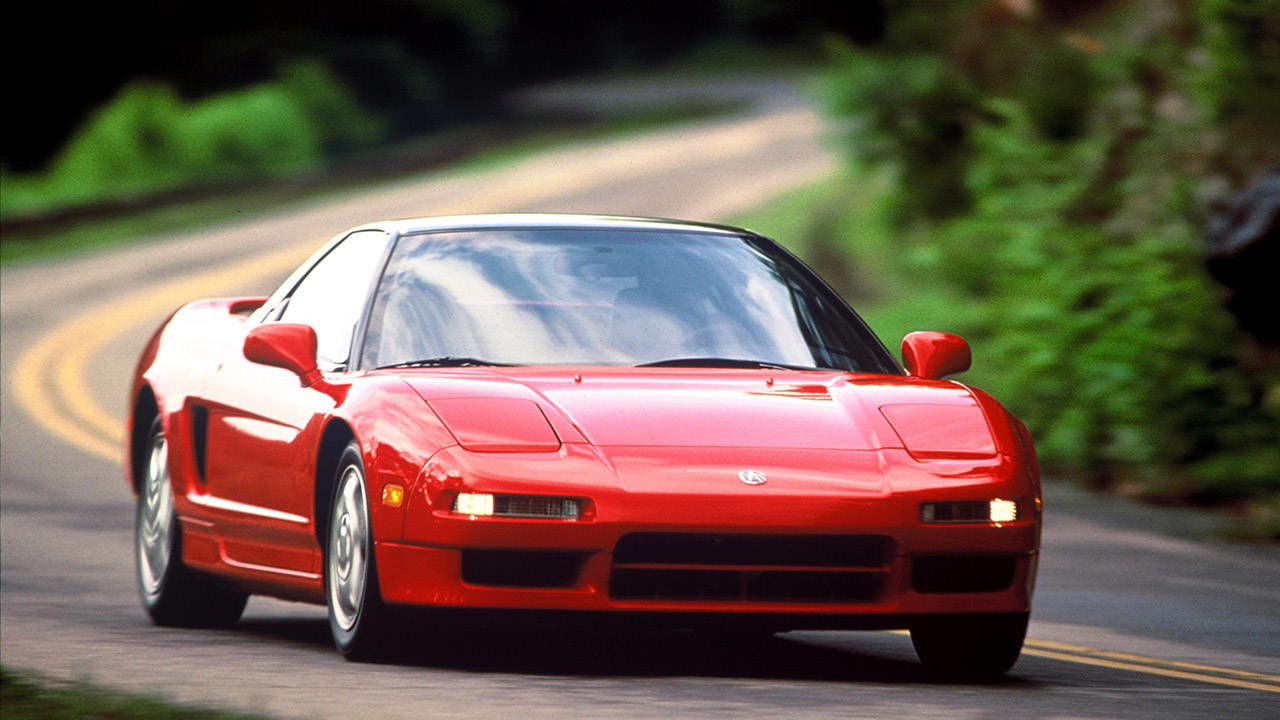
Editorial: Does Acura Need to Fix the 2016 NSX?
![]() |
| Image courtesy of Road & Track |
Labels:
2016
,
Acura
,
editorial
,
Honda
,
hybrid
,
new sports experimental
,
NSX
,
supercar
,
twin turbo
,
V6
Monday, July 27, 2015
Editorial: Why hybrid and EV buyers defect
Labels:
charging
,
editorial
,
electric vehicles
,
hybrid
,
range anxiety
Monday, March 23, 2015
Editorial: Gas tax or mileage tax?
A couple of weeks ago, the state of Oregon, once the pioneer of the user pay principle as the first state to institute a gas tax, announced plans to trial a mileage tax option for its residents. 5,000 volunteers will have the opportunity to test out OreGo, the state's new mileage tax program that will charge drivers 1.5 cents for every mile driven. Those users will receive a monthly bill for their mileage driven and receive a refund of gas taxes already paid.
In principle, this idea of a mileage tax makes sense for several reasons.
One, our cars have gotten increasingly efficient. Your high volume sale family sedan these days gets miles per gallon in the low 20s in the city and low 30s on the highway. Even among entry luxury cars, it is not uncommon to see over 30 mpg these days for highway mileage. That reduction in fuel consumption has led to a significant reduction in the collection of gas taxes, which have not increased proportionally with the increase in fuel economy; a fact that has led to significant reductions in the upkeep, maintenance, and construction of new roads.
Two, the introduction of plug-in hybrids and battery electric vehicles, which use absolutely no electricity, allow those users to dramatically reduce, or in the case of BEVs completely skirt, the payment of gasoline taxes. While the reduction in gasoline consumption is good for the environment, it does so at the detriment to the roads. That is not to say that BEV owners do not contribute at all, as they still pay other taxes and the usual registration fees, but their usage is not contributing proportionally to the funds needed to maintain the roads. As a BEV owner, I am certainly not averse to the idea of paying my fair share, especially since my vehicle still weighs a rather portly 3,600 pounds.
Three, mileage taxes would allow us to reset the expectations around road usage and if priced correctly, might actually serve as a way to encourage the use of alternative transportation. Since the current gasoline tax has not increased significantly since its introduction, phasing in a new way to cover the costs while subtly adjusting for the discrepancy in costs would allow the highway funds to be replenished and might reduce wear and tear by reducing the number of users. Many road users, especially car drivers in metropolitan areas, could easily switch to public transit or cycling for their commutes which would reduce congestion and road wear during the work week and a mileage based tax might just be the way to encourage this behavior.
Of course, OreGo is still in an early test phase and it will be a while before we see how the results actually pan out. As progressive as Oregon might be, its residents are just as wary of some of the potential privacy issues that a mileage-based taxation program might bring. That is one of the key reasons why OreGo will have options for owners on how they want to report their mileage. But at the very least, Oregon is once again taking the initial plunge and is at the forefront pioneering a new idea, that may eventually trickle out to the rest of the states. This is one experiment that we will be watching intently to see what kind of results are produced.
In principle, this idea of a mileage tax makes sense for several reasons.
One, our cars have gotten increasingly efficient. Your high volume sale family sedan these days gets miles per gallon in the low 20s in the city and low 30s on the highway. Even among entry luxury cars, it is not uncommon to see over 30 mpg these days for highway mileage. That reduction in fuel consumption has led to a significant reduction in the collection of gas taxes, which have not increased proportionally with the increase in fuel economy; a fact that has led to significant reductions in the upkeep, maintenance, and construction of new roads.
Two, the introduction of plug-in hybrids and battery electric vehicles, which use absolutely no electricity, allow those users to dramatically reduce, or in the case of BEVs completely skirt, the payment of gasoline taxes. While the reduction in gasoline consumption is good for the environment, it does so at the detriment to the roads. That is not to say that BEV owners do not contribute at all, as they still pay other taxes and the usual registration fees, but their usage is not contributing proportionally to the funds needed to maintain the roads. As a BEV owner, I am certainly not averse to the idea of paying my fair share, especially since my vehicle still weighs a rather portly 3,600 pounds.
Three, mileage taxes would allow us to reset the expectations around road usage and if priced correctly, might actually serve as a way to encourage the use of alternative transportation. Since the current gasoline tax has not increased significantly since its introduction, phasing in a new way to cover the costs while subtly adjusting for the discrepancy in costs would allow the highway funds to be replenished and might reduce wear and tear by reducing the number of users. Many road users, especially car drivers in metropolitan areas, could easily switch to public transit or cycling for their commutes which would reduce congestion and road wear during the work week and a mileage based tax might just be the way to encourage this behavior.
Of course, OreGo is still in an early test phase and it will be a while before we see how the results actually pan out. As progressive as Oregon might be, its residents are just as wary of some of the potential privacy issues that a mileage-based taxation program might bring. That is one of the key reasons why OreGo will have options for owners on how they want to report their mileage. But at the very least, Oregon is once again taking the initial plunge and is at the forefront pioneering a new idea, that may eventually trickle out to the rest of the states. This is one experiment that we will be watching intently to see what kind of results are produced.
Labels:
editorial
,
electric vehicle
,
fuel economy
,
gas prices
,
gasoline tax
,
hybrid
,
mileage tax
,
tax
Wednesday, February 4, 2015
Test Drive: 2014 Chevrolet Volt
Before finalizing our decision to acquire the Focus EV, several other plug-in vehicles made it into our decision matrix, including the Chevrolet Volt. In fact, the Volt was the first remotely economy minded vehicle to make it onto the list, in large part because the incentives available on it resulted in some seriously enticing advertised leases. Add to that the fact that all plug-in hybrids in CA can get single person access to the HOV lanes along with several other nice perks (e.g. free parking, available free public charging, etc.) made the idea of owning something so slow a bit more tolerable. Of course, as much as there is to like about a car like the Volt, it is not without its own unique set of faults, which ultimately led us to pursue a totally different direction.
Labels:
2014
,
5-Door
,
Chevrolet
,
electric vehicle
,
FWD
,
hatchback
,
hybrid
,
Plug-in
,
test drive
,
Volt
Monday, November 3, 2014
Editorial: Will the New EPA Regulations Kill the Horsepower Wars?
![]() |
| Image courtesy of Dodge |
Labels:
alternative fuel
,
electric vehicle
,
EPA
,
fuel economy
,
horsepower
,
hybrid
,
hydrogen
,
model s
,
MPG
,
natural gas
,
P85D
,
tesla
Friday, August 22, 2014
Test Drive: 2014 Honda Accord Hybrid Touring
Every once in a while, a car reaches a crossroads and the automaker must select a path to follow that will set them on a road to either tremendous sales success or possibly to the great junk yard in the sky. For Honda's Accord Hybrid, we already knew the path that Honda selected when we tested the plug-in hybrid version of the Accord at the end of last year. However, earlier this year, we finally had a chance to check out the traditional hybrid version. In its last iteration, the Accord Hybrid was saddled with mediocre fuel economy and a high price tag. Honda appears to have learned a great deal from that experience because this new Accord Hybrid addresses everything that was wrong with that last version and adds a whole lot more to like.
Labels:
2014
,
Accord
,
automatic transmission
,
CVT
,
FWD
,
Honda
,
hybrid
,
I4
,
sedan
,
test drive
Thursday, December 19, 2013
Test Drive: 2013 Honda CR-Z
As I have oft-stated, I am not a fan of hybrids. I always feel like they are too compromised, especially when it comes to performance and driving dynamics. Considering that many gasoline powered cars have reached a point where they are able to achieve extremely good fuel economy, some which rival the economy of the hybrids, the loss of performance that comes with the hybrid simply does not seem justified. However, as a fan of alternative fuel vehicles, I was intrigued when a few years back, Honda introduced a concept 2-door hybrid in a tiny package. The CR-Z, which carried a silhouette reminiscent of the sporty and hilariously fun CRX of the late 80s and early 90s, had the potential to deliver on its promise of making a hybrid that was fun to drive, easy on the wallet, and practical too. The specs were far from encouraging, however, with the combined output noticeably anemic in comparison to other sporty subcompacts in the segment, most notably the funky looking Veloster, but the bantam weight 2-seater had a lot going for it in the way of instantly available torque from its electric motor. Would the CR-Z be the one to change my long-standing critical stance on hybrids?
Labels:
2-door
,
2-seater
,
2013
,
alternative
,
CR-Z
,
CVT
,
fuel economy
,
fuel efficiency
,
hatchback
,
Honda
,
hybrid
,
IMA
,
slow
,
Sport
,
test drive
Tuesday, November 19, 2013
Test Drive: 2014 Honda Accord Plug-In
MSRP: $40,570
Price as tested: $40,570
Hybrid cars are not really my thing. I admit, the only hybrid I have driven to date is a Toyota Prius and yes, it is as boring as all the automotive publications claim it to be. Hybrids have always been seen as appliances by the enthusiast crowd and while there are manufacturers working on making enthusiast friendly hybrids and hybrid super cars, the bulk of hybrids will still always be people movers. But can a manufacturer straddle both sides of the fence and make a hybrid that is both practical and fun?
With the lease on our long-term 2011 Acura RL about to expire, East Brother and I discussed what cars to consider. Given the driving habits of the primary driver, we felt that a hybrid was worth considering, especially given the long stretches of purely city driving that will be done. The problem is that most hybrids are, for a lack of a better word, boring. They are incredibly slow, and handle as well as a wet noodle. When Honda announced the specifications of the 2014 Honda Accord Hybrid, East Brother and I both perked up our ears and after reading the initial impressions of the car by various automotive publications, our interest was genuinely peaked. It would seem that Honda has created a hybrid that is not only practical and efficient, but fun to drive too. Maybe not quite a 4-door CR-Z, but certainly more fun than any Prius.
Unfortunately, as of this writing, the 2014 Honda Accord Hybrid was not available for us to test, but we got the next best thing, a 2014 Honda Accord Plug-In. Seeing as how both East Brother and I enjoyed the 2013 Honda Accord Sport sedan, and how impressed the automotive press is with upcoming 2014 Honda Accord Hybrid, I figured I would give the Accord Plug-In a go. Maybe Honda is able to capture the magic of being efficient and fun in this car as well.
Price as tested: $40,570
Hybrid cars are not really my thing. I admit, the only hybrid I have driven to date is a Toyota Prius and yes, it is as boring as all the automotive publications claim it to be. Hybrids have always been seen as appliances by the enthusiast crowd and while there are manufacturers working on making enthusiast friendly hybrids and hybrid super cars, the bulk of hybrids will still always be people movers. But can a manufacturer straddle both sides of the fence and make a hybrid that is both practical and fun? With the lease on our long-term 2011 Acura RL about to expire, East Brother and I discussed what cars to consider. Given the driving habits of the primary driver, we felt that a hybrid was worth considering, especially given the long stretches of purely city driving that will be done. The problem is that most hybrids are, for a lack of a better word, boring. They are incredibly slow, and handle as well as a wet noodle. When Honda announced the specifications of the 2014 Honda Accord Hybrid, East Brother and I both perked up our ears and after reading the initial impressions of the car by various automotive publications, our interest was genuinely peaked. It would seem that Honda has created a hybrid that is not only practical and efficient, but fun to drive too. Maybe not quite a 4-door CR-Z, but certainly more fun than any Prius.
Unfortunately, as of this writing, the 2014 Honda Accord Hybrid was not available for us to test, but we got the next best thing, a 2014 Honda Accord Plug-In. Seeing as how both East Brother and I enjoyed the 2013 Honda Accord Sport sedan, and how impressed the automotive press is with upcoming 2014 Honda Accord Hybrid, I figured I would give the Accord Plug-In a go. Maybe Honda is able to capture the magic of being efficient and fun in this car as well.
Tuesday, September 3, 2013
Test Drive: Luxury Hybrid wrap-up
Labels:
2013
,
918
,
comparison
,
comparo
,
compromise
,
corvette
,
ES300h
,
ESh
,
Ferrari
,
hybrid
,
Lexus
,
Lincoln
,
luxury
,
MKZ
,
Porsche
,
technology
,
test drive
Thursday, August 29, 2013
Test Drive: 2013 ES300h
Update: See how the Lexus ES300h performed in our entry luxury hybrid head-to-head.
We continue our look at luxury hybrids with an entry from Lexus. Falling into a similar price as the MKZ we tested earlier, the ES300h is also a platform shared vehicle, developed off of the newest version of the Toyota Avalon. The advantage to stepping up to the Avalon's platform from the Camry's is that it offers a much longer wheelbase, allowing for greater interior volume and potentially greater comfort. However, as with many platform shared vehicles, it becomes a challenge to differentiate the "luxury" branded vehicle from its lesser brand platform sibling. So has Lexus managed to pull this off and produce a platform shared car that can truly justify the price premium? Let us take a closer look.
Tuesday, August 27, 2013
Test Drive: 2013 Lincoln MKZ Hybrid
Update: See how the Lincoln MKZ performed in our entry luxury hybrid head-to-head.
I struggle with hybrids. My biggest issue is that most hybrids sacrifice so much performance in the search for every last MPG, resulting in a miserable driving experience that often makes me want to pull my hair out. However, the earliest popular hybrids (I'm looking at you Toyota Prius) have long been replaced by a whole slew of new generation hybrids that look more like normal cars and are finally starting to drive like them too. In fact, they have been refined enough that luxury manufacturers have started to incorporate hybrids into their line-ups in various ways. In this brief series, we take a look at two of the luxury hybrids competing for the dollars of American buyers, with very different focuses despite being in the same vehicle class and price range.
Today, the subject under our microscope is Lincoln's toothsome MKZ. Sharing a platform and drive-train with the Ford Fusion hybrid, the Lincoln offers buyers who want all the advantages of a hybrid, but do not like the handsome Ford's look or feel that the Fusion lacks the luxury brand cachet the Lincoln supposedly possesses. Lincoln has gone through a great deal of effort to differentiate the MKZ from its lesser platform-mate, giving it distinct body panels and interior pieces in order to widen the gap as much as possible. But is it enough to justify the added cost that comes with purchasing the Lincoln over the Ford? Let's take a closer look.
I struggle with hybrids. My biggest issue is that most hybrids sacrifice so much performance in the search for every last MPG, resulting in a miserable driving experience that often makes me want to pull my hair out. However, the earliest popular hybrids (I'm looking at you Toyota Prius) have long been replaced by a whole slew of new generation hybrids that look more like normal cars and are finally starting to drive like them too. In fact, they have been refined enough that luxury manufacturers have started to incorporate hybrids into their line-ups in various ways. In this brief series, we take a look at two of the luxury hybrids competing for the dollars of American buyers, with very different focuses despite being in the same vehicle class and price range.
Today, the subject under our microscope is Lincoln's toothsome MKZ. Sharing a platform and drive-train with the Ford Fusion hybrid, the Lincoln offers buyers who want all the advantages of a hybrid, but do not like the handsome Ford's look or feel that the Fusion lacks the luxury brand cachet the Lincoln supposedly possesses. Lincoln has gone through a great deal of effort to differentiate the MKZ from its lesser platform-mate, giving it distinct body panels and interior pieces in order to widen the gap as much as possible. But is it enough to justify the added cost that comes with purchasing the Lincoln over the Ford? Let's take a closer look.
Sunday, August 11, 2013
Editorial: What Does the Average Car Buyer Look For?
![]() |
| Image courtesy of Sunbrite Auto Works, Inc. |
In order to help me gather data, I devised a short survey to see what the average car buyer looks for when looking for a new car. After passing it around to friends and family, here are the results of the survey. Keep in mind that this is an informal survey and is in no way scientific, but does show how one broad group of people approach buying a new car.
Labels:
alternative fuel
,
automatic transmission
,
Average
,
bluetooth
,
braking
,
brand image
,
buying
,
car
,
editorial
,
electric vehicle
,
handling
,
hybrid
,
power
,
rear camera
,
Survey
,
traction control
Tuesday, August 6, 2013
Test Drive: 2013 Ford Fusion SE Hybrid
Read our review of the non-hybrid Ford Fusion by clicking here.
Despite arriving at night, the heat radiated up from the Arizona dessert, creating a sweltering sauna of an evening as I slogged the 50 feet between the rental car shuttle and the massive rental car complex. It was late and I was already a bit tired from my flight from Boston, but the nice young lady at the rental counter, who promptly recognized that my colleague had come through earlier in the day, plus a nice chilled bottle of water helped keep my grumpiness in check as I trolled the aisle in search of my ride for the next 24 hours. The faux Aston Martin grille of the Ford Fusion caught my eye and I promptly gravitated towards it, which the rental car associate in tow, emptying a load of barely intelligible words that simply bounced off my brain without leaving so much as the slightest impression. Collecting the keys, I promptly thanked the associate for her assistance and threw my bag in the trunk before doing a quick walk-around to inspect for damage. Hopping in the car, I eased it silently away into the Arizona night.
Sunday, July 21, 2013
Test Ride: K2 Astral 1.0
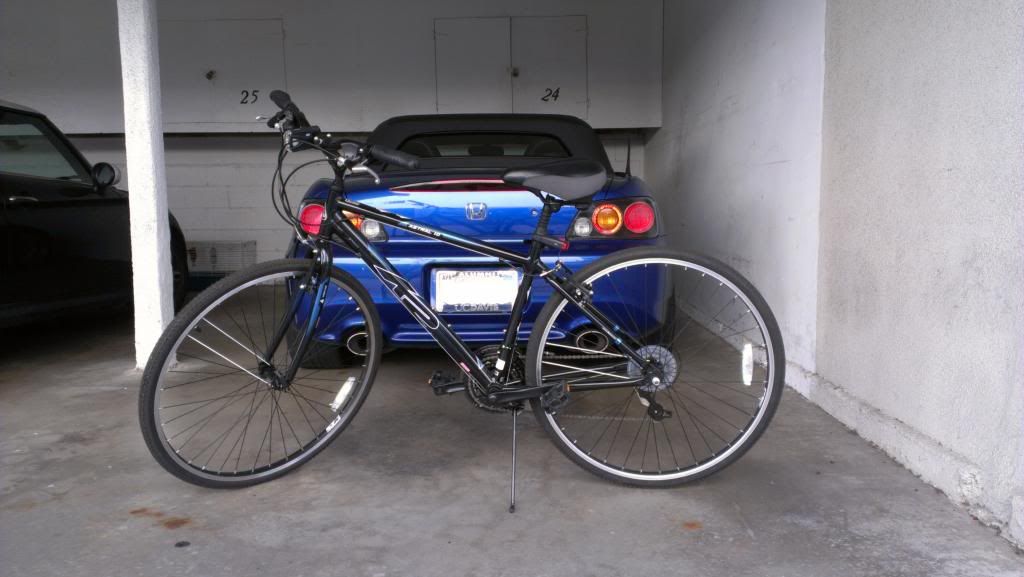
Here at East West Brothers Garage, our focus is usually on vehicles powered by some sort of motor or engine. However, as much as we enjoy our petrol powered vehicles, the both of us do occasionally feel the need to use something more environmentally friendly. What is more environmentally friendly than a vehicle powered by man itself? I am, of course, talking about bicycles!
The specimen I review here is a recent purchase of my own, the K2 Astral 1.0 hybrid road bike. I had originally purchased a $95 Wal-Mart mountain bike, but that ended up being a terrible idea as the gears did not all work and the bike was improperly sized. After selling the Wal-Mart bike on Craigslist, I made it a point to spend more than $100 on bicycle and to get something that actually worked and fit me properly.
I will admit though, I do not know a whole lot about bicycles. I have, at this point in my life, only owned three bicycles, including the one being reviewed here. The first bike I ever owned was, yet again, another $90 Wal-Mart bike that I purchased to use while attending UC Davis. After owning the bike for roughly two days during my freshman year, it was stolen and I never saw it again. Despite registering the bike with the police a day after I bought it, it was never recovered. The second bike was the $95 Wal-Mart bike I described above. And so we come to the Astral 1.0, which cost $299 ($249 after a Google offers discount). Is this bike worth three times the cost of the Wal-mart bikes?
![]() |
| The K2 Astral 1.0 parked in front of my S2000 |
I will admit though, I do not know a whole lot about bicycles. I have, at this point in my life, only owned three bicycles, including the one being reviewed here. The first bike I ever owned was, yet again, another $90 Wal-Mart bike that I purchased to use while attending UC Davis. After owning the bike for roughly two days during my freshman year, it was stolen and I never saw it again. Despite registering the bike with the police a day after I bought it, it was never recovered. The second bike was the $95 Wal-Mart bike I described above. And so we come to the Astral 1.0, which cost $299 ($249 after a Google offers discount). Is this bike worth three times the cost of the Wal-mart bikes?
Labels:
1.0
,
Astral
,
Bell
,
bicycle
,
hermosa beach
,
hybrid
,
K2
,
marina del rey
,
test ride
,
the strand
,
Wal-Mart
Subscribe to:
Posts
(
Atom
)