Showing posts with label comparison. Show all posts

Thursday, September 27, 2018

Comparison: 2018 Honda Accord Sport 2.0T vs 2018 Honda Civic Si Sedan

Ever since Honda announced in 2013 that the Accord would come in a Sport trim, with available six-speed manual transmission, I've often wondered if the Accord Sport would be a better deal than the Civic Si. For starters, both cars were very similarly priced and had essentially the same engine. For the price, the Civic did come with more features, a little more horsepower, sharper handling, and a limited slip differential. With the Accord, you got a much larger and more grown-up looking car, and that was pretty much it. Ninth gen versus ninth gen, I would have gladly taken a Civic Si home before taking the Accord Sport home.

Things are different with the tenth generation though. Both cars are much more feature rich than their predecessors, and the Accord Sport now actually has two engine options: a slightly up-tuned version of the 1.5 liter turbo four from the Civic coupe, sedan, and hatchback, and a de-tuned version of the 2.0 liter turbo four from the Civic Type-R. Unlike the previous generation though, the price difference has become much more significant. The Accord Sport 1.5T starts at an MSRP of $25,700 while the Civic Si stars at an MSRP of $24,100. I actually looked at the Accord Sport 2.0T, which adds an additional $4,580 on top of the base MSRP, making the Accord Sport 2.0T a $30,000 car. So the question isn't so much which is the better car for roughly the same price. The question has now become, "is the Accord Sport worth the extra $6,000 over the Civic Si?" As luck would have it, a local Honda dealer had both an Accord Sport 2.0T and a Civic Si Sedan available, so I decided to take a look at the cars side-by-side to determine if the Accord is worth the extra money.

Tuesday, October 17, 2017

Comparison: 2014 Ford Focus Electric vs 2017 Chevrolet Bolt EV

Before we had to return the Focus, it seemed prudent to take a moment to see just how much electric vehicles have progressed in the last three years. When we first acquired the Focus in 2014, it was a competitive, albeit with a few shortcomings, vehicle among the rather small class of available EVs. During that time, we have gotten to see the EV landscape evolve significantly as the cars have gotten a lot more capable and the availability of charging infrastructure has improved dramatically, both in terms of more available Level 2 and both the speed and availability of Level 3 DC fast charging. Comparing our outgoing Focus Electric with our newly acquired Bolt EV allows us the opportunity to really examine just how significant those changes are and what that means for the future of EVs as we see more manufacturers make commitments to joining the EV marketplace.

Wednesday, January 11, 2017

Long Term Test: 2014 Acura RLX Tech post #6

The recent acquisition of our 9th generation Honda Accord Touring places us in an interesting position to examine something: is the RLX genuinely worth the rather extensive premium over its more pedestrian relative? While a bit older in age, the RLX and the Accord both sit at the top of the sedan ranges for their respective brands. They theoretically serve the purpose of getting buyers to get large sedans with nearly full-size levels of leg room in more typically mid-size exterior dimensions. Sharing many traits, including their FWD architecture, similarly rated 3.5-liter V6 engines, and even their 6-speed automatic transmissions, the two cars are so close in spec that it is no surprise that people often complain about the RLX being little more than an Accord in a fancy suit. But since we actually have the two cars in our possession at the same time, let's actually compare a few of their key traits and see if the comparison is a fair one.

Friday, August 26, 2016

F-Type vs. S2000: Is the Jag Really Worth an Extra $42k?

Ever since we acquired a Jaguar F-Type in our long term garage, we have been wanting to pit West Brother's S2000 against it in a sort of "David vs. Goliath" type scenario. Seems like an apples to oranges type comparison, right? Strangely enough, not really. The 2015 Jaguar F-Type we have access to is the standard, supercharged V6 equipped model, making 340 horsepower. Its fastest recorded zero to 60 time is five seconds flat, with a 13.0 second sprint to the quarter mile. West Brother's 2007 Honda S2000, while having a 100 horsepower deficit, makes up for the power difference with a huge weight advantage. The fastest recorded zero to 60 time is 5.4 seconds, with a quarter mile sprint completed in 13.8 seconds. Just by looking at the numbers, there really is not a huge difference in performance. From just performance alone, the Jag has a hard time justifying that extra $42,000. But what about the rest of the car?

Wednesday, July 15, 2015

Comparison: F1 2013 vs. F1 2014

One of the biggest complaints that I have heard regarding the 2014 Formula One season is that the cars seem a lot slower than the cars from the 2013 season. This could be due to a lot of things, ranging from the aero changes to the new 1.6 liter turbocharged V6 engines that were adopted for the season. After hearing all the negative feedback regarding the new cars, I wanted to see just how much slower the 2014 cars were compared to the 2013 cars. Without access to actual Formula One cars and drivers, I had to resort to the next best thing: racing simulators. With access to both F1 2013 and F1 2014 by Codemasters, I can at least get a fairly good idea of how much slower the 2014 cars are compared to the 2013 cars.

*All game play captured on the PC versions of the games with an Xbox 360 controller

Friday, May 8, 2015

Comparison: Mid-Size Luxury Mayhem

Over the past few weeks, we have looked at a total of seven different mid-size luxury sedans. Our criteria for these sedans were that they needed to be two-wheel drive (primarily for fuel economy purposes), have no more than 250 horsepower, and should have equipment similar to a Honda Accord Touring (leather, navigation, LED or HID headlights, back-up camera, etc.). Pretty much every luxury car manufacturer has a mid-size vehicle that fits this criteria, but we chose these seven as they are often considered to be the most popular in this segment. Seven enter, but only one will emerge the victor.

Click below to read each vehicle's individual review:

Acura TLX 2.4 Tech
Audi A4 2.0T FWD Multitronic
BMW 328i
Cadillac ATS 2.5
Lexus IS250
Mercedes Benz C300
Volvo S60 T5 Drive-E

Wednesday, June 18, 2014

Test Drive: Entry-Level Engagement Comparison

Remember a time when the words "entry-level luxury" were muttered, images of the Mercedes Benz C-Class or the BMW 3-Series came to mind? That actually was not all that long ago, but because our cars continue to grow in size, what was once considered "entry-level" and "compact" has now grown to "mid-size." The prices of these cars have also followed along with their size, growing with each successive generation. So what is a luxury car maker to do in order to get young people interested in their brands? Introduce a whole new entry-level luxury class.

What we have here are three of the many entry-level luxury cars currently on sale. You can read their individual reviews in the links below:

2013 Acura ILX
2015 Audi A3
2014 Buick Verano

Why these three? These particular cars have something that not many of the other entry-luxury cars have: underpinnings that belong to a cheaper vehicle from a parent brand. Entry-level luxury cars are all about providing luxury for a lower starting price, and what is a better way to cut costs than to use an existing vehicle's architecture? The Acura ILX shares its platform with the Honda Civic, the Audi A3 shares its platform with the Volkswagen Golf, and the Buick Verano shares its platform with the Chevrolet Cruze. Underpinnings aside, which of these three shared platform vehicles offers the best luxury bang for the buck?

Wednesday, May 21, 2014

Test Drive: 2014 Bike Month Wagon Comparison

During the last couple of weeks, we have taken a look at each of the individual contenders in our bike friendly wagon comparison. You can click on each of the following links to take an in-depth look at each:

2014 Acura TSX Sport Wagon
2014 Audi Allroad Premium Plus
2014 BMW 328i xDrive Sports Wagon
2015 Volvo V60 T5 Drive-E Premier
 
These long-roof cars offer tremendous versatility, but try hard not to sacrifice the driving dynamics that make them fun for the driving enthusiast. Each vehicle won at least one category and the difference in score between the winner and the runner-up was just a few points and only one point separated second and third. The gap that separates the last place contender from the rest of the pack is a fair bit larger. Overall, there were several categories where it was so close, I felt it best to declare a tie. However, none of these is cars is terrible at all. In fact, I can honestly say that there is not a single bad car in the group and that the winner was decided largely by a matter of degrees.

Thursday, October 3, 2013

Test Drive: Jaguar F-Type V6S vs Porsche Boxster S Head to Head


Picking a convertible can be a very emotional undertaking. You want to find something that is fun to drive, offers great flexibility, yet is not likely to to present too many reliability challenges. Recently, I did back-to-back tests of the newest entry to the luxury convertible class, the Jaguar F-Type, and the class standard bearer, the Porsche Boxster S. The Jag, with its sensuous shape and screaming exhaust system is a hot car and should serve as further indication that Jaguar is serious about a comeback after years of being relegated to the also-ran category. Its recent efforts, starting with the introduction of the XF sedan, the revised XJ, and now the F-Type definitely cemented Jaguar's place back in the minds of luxury buyers. However, is this new effort a good enough car to knock off Porsche, still one of the most beloved brands among car buyers in the US? Porsche's Boxster and 911 are frequently touted as being the ideal of what sports car owners look for in their rides, can the F-Type, which is aimed squarely between the two P-Cars, deliver a solid enough blow to keep it in contention?

Tuesday, September 24, 2013

Test Drives: Subcompact Showdown

Over the past few weeks, my fiancee and I have looked at a few subcompact hatchbacks. You can read the individual reviews for those by clicking on the following links:

2013 Honda Fit Sport
2013 Mazda2 Sport
2012 Ford Fiesta SES
2013 Chevrolet Sonic LT
2014 Nissan Versa Note SV

The subcompact car has made quite a boom in the last few years. With ever rising gas prices making it impractical to plod around town in a giant SUV, many car buyers looking for their first car want something that offers the space of an SUV, but the efficiency of a small car. Subcompact hatchbacks are designed to offer the best of both worlds, with cargo space that rivals some small SUVs, and small, fuel efficient engines. Of the five we tested though, which one offers the best bang for the buck? Read on to find out!

*Starting with this comparison, standings will be determined with a point system. Each category will have a maximum of five points, with 1st place receiving five points, 2nd receiving four points, 3rd receiving three, 4th receiving two, and 5th receiving one.  

Tuesday, September 3, 2013

Test Drive: Luxury Hybrid wrap-up


After spending some time with two luxury hybrids - the Lexus ES300h and the Lincoln MKZ Hybrid - albeit slightly more affordable hybrids based on technology that is derived from a less expensive platform mate, I am not totally convinced that these cars are ready for mainstream consumption. In many ways, the very idea of a hybrid is counter to the concept of luxury, which is often seen as being able to do without compromise. However, hybrid vehicles are inherently a demonstration in compromise because in the vast majority of instances, performance is sacrificed at the altar of  fuel efficiency. While there are other hybrids on the market that supposedly do not give up performance, they also fail to significantly improve fuel economy. In many ways, there are simply better alternatives if you want a luxury car that still gets reasonable fuel economy.

Tuesday, June 4, 2013

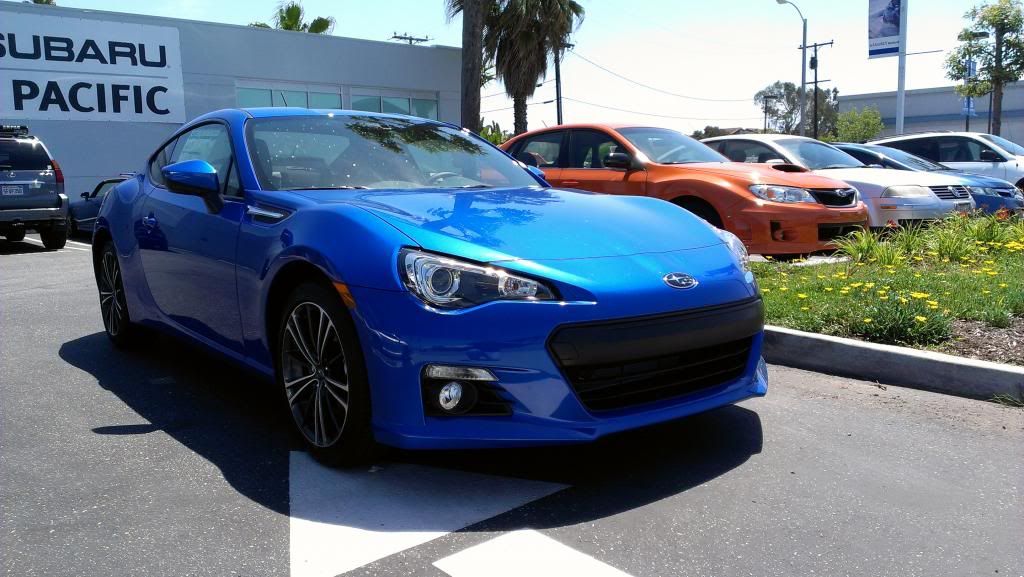
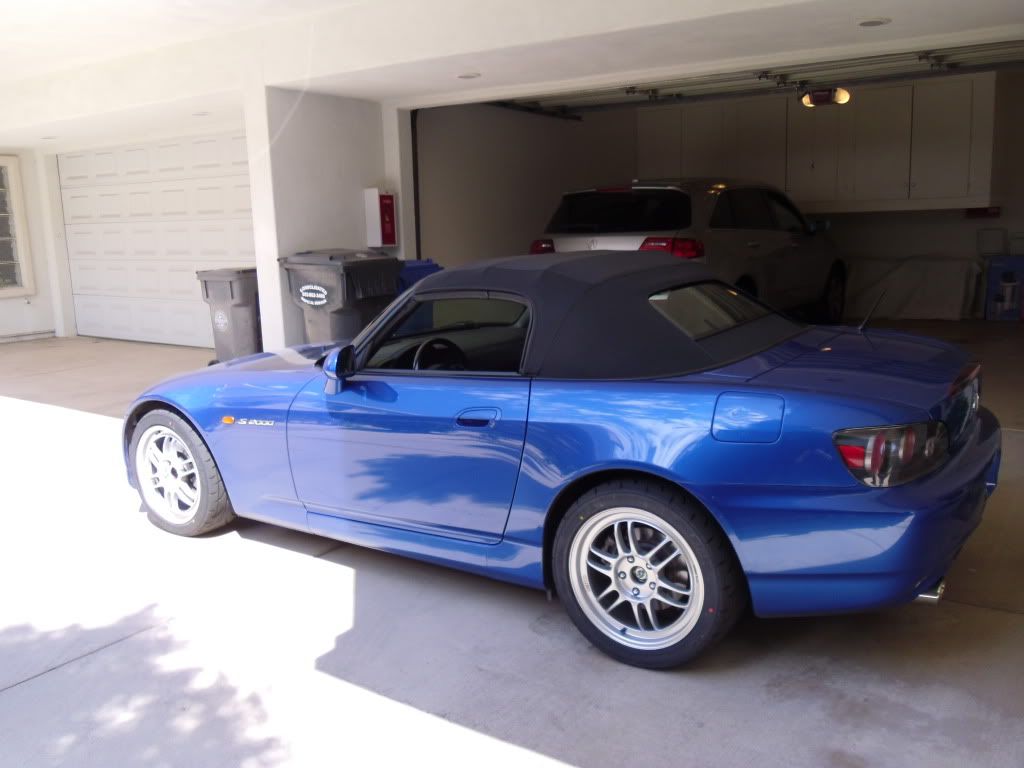
Old vs New: Light Weight RWD Sports Cars (2007 Honda S2000 vs. 2013 Subaru BRZ)

With the recent introduction of the Subaru BRZ/Scion FR-S twins, it would seem that lightweight, rear drive sports cars are making a bit of a come back. What better way to find out if the Subaru/Scion duo did it right by comparing it to another light weight, rear drive sports car? Luckily, I am the proud owner of a slightly older light weight, rear drive sports car, the Honda S2000.

The goal here is not to determine which car is faster, as that would not be a fair fight considering my car out powers the BRZ by a fairly significant amount. My goal in doing this comparison is to find out if Subaru got the lightweight, rear drive formula correct, and to see which of these two cars are more fun to drive.


VS


Thursday, May 9, 2013

Test Drives: 2013 Hot Hatch Comparison

During the last few weekends in March, we tested five hot hatchbacks currently available in the market. Those reviews can be read by clicking on the following links:

2013 Fiat 500 Abarth
2013 Subaru WRX 5-Door
2013 Mini Cooper S
2013 Volkswagen Golf GTI Autobahn Edition
2013 Ford Focus ST

What is a hot hatchback? Many people have variations on the definition of what makes a hot hatchback, but to us, it is pretty simple. It should be a hatchback with ample cargo space like its more pedestrian counterpart, but with a sport tuned suspension, more powerful engine through turbo charging or increased displacement, and the right amount of exterior modification to help it look sporty and differentiate itself from its more basic sibling. A hot hatchback should be a car that you can drive everyday to work or the grocery store, but should also be capable of handling spirited driving sessions, or even a track day or two. So we rounded up some of the most popular hot hatches on the market to see which one best meets that definition.

Thursday, April 11, 2013

Test Drive: 2013 Mid-size Family Sedan Comparo

Over the course of the last few weeks, we have individually examined a number of mid-size family sedans. You can read the detailed individual reviews by clicking on the followings links:

2013 Ford Fusion SE
2013 Honda Accord Sport
2013 Kia Optima LX
2014 Mazda 6 Touring
2013 Nissan Altima S
2013 VW Passat SE

Each car had its strengths and weaknesses, so declaring a winner was fairly challenging, though a clear loser was evident from the start. Continue reading to see how the cars performed in the various categories.

Tuesday, March 19, 2013

Test Drive: 2013 BMW 328i vs 2013 Cadillac ATS 2.0L

Cadillac came out swinging this time. Their new ATS sedan is aimed squarely at the venerable BMW 3-Series with dimensions that are nearly identical, a drivetrain that is nearly identical in specs, and interior volume measurements so close, you would think they were the same car inside. But can the the new guy really take on the reigning champ? Heck, can the new guy even land a solid enough blow to leave a mark? We have done individual reviews of the ATS and 328i, but we wanted to take a closer look at how these two remarkable cars stack up against each other. When we drove them, we had the chance to actually drive them back to back and get very direct comparisons between them.

Thursday, November 15, 2012

2012 $30k Mid-size entry luxury sedan comparo

As my daily driver, I own a 2012 Acura TSX Special Edition. Often regarded as a 2nd-tier entry against some of the more established (read “European”) competitors, the TSX often gets overlooked by buyers who believe that the competition offers something that the TSX does not. This past week, I had the occasion to spend a fairly extended amount of time with two of the competitors in the same class as the TSX and decide whether or not I made the right choice.

To be fair, the comparison will not be exactly 1-to-1 as my TSX is fitted with Acura’s fantastic 6-speed manual transmission instead of an automatic like the two test cars. This obviously colors the driving involvement, but given that both the Volvo S60 and Mercedes Benz C250 are fitted with advanced automatics with at least as many gears, there is not too much of an advantage offered to the TSX.

Acura TSX Special Edition

2012 Acura TSX Special Edition
I have now owned the TSX for approximately 6 months. It is mine and my wife’s only car and we got it brand new from a dealer in the DC area. The car was not available with any options so we have to do without a built-in navigation system or any kind of color display for managing the features in the car. That said, the car does come very well equipped right off the bat: leather and suede seating surfaces with memory for the driver’s seat, power passenger seat adjustment, HID headlights, Bluetooth hands-free and streaming audio, USB and aux inputs, dual zone climate control, 60/40 split fold rear seat, and much more. At an as tested price of $32,405, it is by far the least expensive car of the bunch, but still feels like it fits well within the group.

Volvo S60 T5

2012 Volvo S60 T5 FWD
The next car in our test is a 2012 Volvo S60 T5 that I had for a full week and just over 200 miles behind the wheel. This car, fitted with the Premier package includes the power moon roof, leather seating surfaces, and the keyless drive system (which incidentally was not functioning correctly) carries an as-tested price of $34,845. However, the car is clearly ahead of the TSX when it comes to the cars infotainment setup as the S60 has Volvo’s very large and well sorted SENSUS system with its large color screen, though the instrument cluster sports the same type of lower resolution single color screen as the TSX. Bluetooth hands-free and streaming audio are standard along with a USB port under the center console armrest. The car is fitted with Volvo’s torquey turbo-charged 2.5L inline 5-cylinder motor and 6-speed automatic transmission.

Mercedes Benz C250 Luxury

2013 Mercedes Benz C250 Luxury
The third car in our test is a 2013 Mercedes Benz C250 Luxury fitted with MB’s all new 1.8L turbo-charged inline 4-cylinder and 7-speed automatic transmission. This car was about as base as one can get for this vehicle and yet, still has an as-tested price tag of $38,945. The only options on this particular test vehicle were the heated seats and the Becker Auto Pilot navigation system. This was the only car in the test to not have real leather, though one would barely notice it as the interior felt sufficiently premium. The car came with the standard 5.8-inch infotainment screen with the same controller used with the COMAND system.

User interfaces

Slightly button happy center console of the TSX
The three cars take very different approaches to user their driver and passenger interfaces. The TSX is the most focused on driving, with a small radius steering wheel and controls that can easily be used without taking your eyes off the road. The only screens are small and relatively low resolution with minimal information outside of immediately useful info. Everything falls comfortably to hand exactly where you expect it, but it does take a fair amount use to get fully comfortable with the location of the rather plentiful array of buttons.

Volvo's now standard waterfall center consolde
Volvo, on the other hand, has taken their traditional waterfall center console that has become a staple of their interiors and added the SENSUS system to it, providing a vivid high-resolution screen on all S60s, including those that do not have navigation. The center stack is simple to use, but some of the small buttons do not fall to hand easily due to their small size, especially the number pad that is used for virtually all of the radio functions. The instrument cluster has two small low resolution dot matrix screens, similar to the one on the TSX.

The slightly busy but premium looking MB
The MB definitely shows where the extra money they are asking gets spent. The screen in the center stack is high resolution and the one large screen built into the speedometer is impressively colorful and provides a useful variety of information, though not all at the same time, annoyingly enough. The COMAND interface’s knob is easily within reach, but the entire system is hard to use without taking your eyes off the road and not particularly intuitive. Additionally, the audio system is probably the worst to use from an interface perspective. It was the only vehicle that I could not figure out how to access Bluetooth audio without reaching for the manual.

Driving Impressions

Each car carries its own unique driving characteristic that is reflective of the reputation of its maker. They each have areas where they exhibit the greatest strength and areas where they feel the weakest, but, surprisingly, there is little overlap in these areas.

Lack of polished exhaust tips cheapens the look of the Volvo
For sheer thrust, Volvo’s turbo-charged 5-cylinder in combination with the 6-speed transmission is king of this hill. Drop the hammer and grab the wheel with a death grip because the torque steer when the turbo boost arrives is downright shocking. Once the front wheels are pointing straight again, stay on the throttle and the car just lunges forward, the turbo’s slightly shrill chirp punctuating the deep intake roar that fills the cabin. This is a fun car to drive on straight flat roads, but introduce some corners and the composure begins to slip away quickly.

While the steering feel is good and seems relatively precise, the limits of grip get reached very soon and the car begins to slide around mid-corner before the stability control kicks in and reins everything in before things start to get even a little exciting. Volvo’s reputation for safety still reigns supreme as any effort to have fun in this car is sternly put down by the computer, its virtual finger wagging at you as if to reprimand you for doing anything even slightly foolish.

The MB is a bit plain but with good road presence
The Mercedes, on the other hand, disappoints greatly with the newly introduced turbo-charged 1.8L inline-4. The specs, on paper, for this motor should make for a lot of fun and coupled with the 7-speed automatic, should return fantastic gas mileage. Sadly, the case as the motor felt flat the whole way through the rev range and returned fuel economy that was sadly the worst of this bunch. Where the Mercedes shines is the complete smoothness with which it goes about its job. Absolutely nothing could upset the motor and transmission and it shifted smooth as butter at all speeds and all throttle openings. However, the downside to this is that the throttle lag saps any directness out of throttle inputs and frustrates all attempts at precision, making fun driving an exercise in futility.

This is disappointing because the body structure of the MB feels like it is hewn from a solid block of granite. Add in the fact that it is the only RWD car in this comparison, this chassis has the potential to be the stand-out driver’s car. The grip is easily the highest of the group and the steering feel is good, but where this car really disappoints is the ride. For a car that is starting to get up there in price and does every other aspect of isolation so well, it is sad that where it falls flat is the inability to provide a smooth ride, especially over low speed bumps. Several potholes encountered and speed bumps sent such jarring reverberations through the cabin that I had to recheck the badge to make sure I had not mistakenly taken some dressed up Geo Metro by accident. I even checked the tire pressures just to make sure that was not the problem and the tire pressures were correctly set to factory spec. This is extremely unfortunate because this car could have been great fun.
Slab-sided and chiseled, this is one of the better angles of the TSX

By far the most balanced of the group is the TSX. Despite sporting on paper what should be the weakest motor, the sensation from behind the wheel is that the 4-cylinder is surprisingly spry with impressively linear power delivery and is accompanied by a throaty intake roar. Fitted with the rifle-bolt precise shifter of the 6-speed manual, the TSX is an absolute joy to drive and feels the most like a true extension of the driver’s senses. Even the electronic power steering that I had previously hated on in the earlier years of the 2nd generation cars feels great in comparison to the Volvo or the MB. Sure it is still not quite as good as the direct feel in the 1st generation cars, but it is a significant improvement from when the car was introduced for the 2009 model year.

The general sensation from behind the wheel of the TSX is that everything feels very balanced. The suspension is tuned to be stiff without being harsh. The car is easily steerable with the throttle though still exhibits understeer at the limits though would benefit greatly with from a limited slip differential. Grip, however, is a bit lacking as the tires fitted from the factory are pretty terrible. With nothing more than a tire swap, this would be an even better car as it would also cure some of the tire noise that penetrates the cabin while under way.

In the end…

As I stated earlier, each car is a reflection of its respective manufacturer’s values. The Volvo feels safe but unfinished, the MB feels solid but staid, and the TSX feels balanced but dated. There is much to like about each car, but at the end of the day, they appeal to different segments of the market. For my money, the balance of the TSX combined with the availability of the manual transmission and a great value trumped all other factors.

The TSX is by no means without fault. It certainly has developed a few odd noises that are intermittent and come and go with the temperature fluctuations. It also is on the loud side, in large part due to the tires fitted to the car from the factory. Also, Acura could stand to fit the car with a better looking and larger diameter set of wheels that better complement the look and handling capabilities of the car. These are ultimately minor quibbles in the grand scheme of things, but can easily influence a buyer's decision. And finally, the look of the front end is still an acquired taste, just to be kind.

However, if I were to abandon my addiction to shifting for myself, I believe the choice would have been much more difficult. The Volvo combines a lot of things that I genuinely need with some of the most comfortable seats I have ever experienced in a car. It is likely the car that would give the TSX a run for my money.