This week is National Teen Driver Safety Week. Even in this day and age of greatly improved safety devices in cars, crashes are still the top killer of people 15 to 20 years of age. Progress has slowly been made as states update their licensing requirements (to varying degrees of effectiveness), but there are still tremendous gaps in many states and there is always more that can be done to help improve the situation. A few stories shared on Jalopnik about driver's education experiences really show just how far we still have to go. Take this story, for example:
"In Virginia the driving section was done through a private company which charged hundreds of dollars for (mandated by law) five sessions and a test at the end. The owner of the school picked me up on day one and we drove around for a half hour then took me home. He handed me a signed paper and said, “It’s been nice getting to know you over the past five days, good luck to you.”
I crashed my car a week later."
Such stories are probably more common than we think. Young drivers who fail to receive adequate training to handle some of the more unexpected and challenging situations are certainly contributors towards the crash statistics so Michelin, in the spirit of improving driver education, has asked more experienced drivers to share their safety tips with those less experienced. Finding a way to share our collective wisdom to improve the safety of all on the road is a great start towards making a difference in the education process, but it is no substitute for significantly more stringent driver education standards. If you have wisdom to share, simply tag it with #SharingSafety. You can also check out our own Driving 101 collection of posts for some of our tips.
The longer term implications of better teen drivers now is better adult drivers in the future. That is a worthy investment, if there ever was one.
I had planned on running an editorial on a different topic, but reading some of the commentary on several recent incidents involving cars and two-wheeled vehicles along with nearly getting run over by cars while crossing the street last week has me more than a little upset at the callous attitude so many drivers exhibit. The most recent incident, shown in the video below, records one of the most unnervingly unsympathetic and completely sociopathic people I have ever seen. Shortly after swerving to cause a motorcycle carrying a passenger to crash, this driver has the gall to stand there and declare, "I don't care" when he is questioned about what he just did. Such disregard for human life is not just a little scary, it is downright run-for-the-hills alarming. Then, to make matters worse, the comments from other people start to pile on and, protected by the anonymity of the Internet, we get to really see what people think of those of us who choose not to get around everywhere surrounded by the metal crash structure of a car.
My own experience this past week has not been significantly better. On one occasion, while crossing at a signal controlled intersection, within the boundaries of the clearly marked crosswalk with a clearly visible walk signal, my dog and I were nearly run down by a livery driver who thought it was entirely appropriate to enter the crosswalk as soon as I had cleared the space he wanted to occupy, barely missing us by inches. Naturally, such a close encounter is going to startle a pedestrian and I immediately spun around to confront the driver of the large black SUV, who threw his hands in the air in exasperation as if he were confounded by why I was upset. Setting aside the fact that he was in clear violation of the law, which requires that drivers refrain from entering a crosswalk until pedestrians have cleared it completely, his lack of any semblance of guilt for the maneuver, compounded by his clear lack of giving a shit for my safety, sent me into a rage, causing an expletive laden diatribe to pour forth from my mouth. The SUV screeched off and I was left upon the side of the road seething in an adrenaline fueled state of anger.
Stories like this are all too common among the cycling community as well. There are countless stories of drivers intentionally making efforts to intimidate riders who are following their legal right to use entire traffic lanes. Some drivers go so far as to knock the rider over, force them off the road, or otherwise cause them bodily harm. When such incidents are reported in the media, the commentary that follows usually devolves into a cesspool of shameless victim blaming with many people voicing the sentiment that the cyclists "got what they deserved" for taking up the whole lane.
I believe this mentality towards anyone not ensconced in the confines of a car seems stem from a few key areas: ignorance, unfairness, and lack of education.
The ignorance comes in many flavors. It could be ignorance of the laws. It could be ignorance of the experience of others. It could just be plain and simple ignorance because of lack of exposure. Whatever, the cause, ignorance can be a tremendously dangerous fuel for dangerous and destructive behaviors. One of the greatest areas of ignorance for many Americans is simply an ignorance of perspective through the eyes of another road user. Most Americans will never ride a motorcycle during their lifetime and most stopped riding bicycles when they became old enough to drive. Since our culture is so dominated by driving, most Americans hardly spend time as pedestrians anymore, aside from the walk from the car door across the parking lot to enter the fast food join where their dinner awaits. Not understanding how the world view is different through the eyes of a pedestrian, cyclist, or motorcyclist leads to a lack of understanding of what is perceived as dangerous. Driving in a car, passing a pedestrian or cyclist with less than a foot of space may seem totally safe to a driver, but is a shockingly close call to someone without any kind of physical protection.
One of the most common arguments against the idea of letting motorcyclists lane split is that it is "unfair" for drivers to have to sit in traffic while motorcyclists get to zoom ahead. A common myth levied against cyclists using traffic lanes is how "unfair" it is that cyclists are allowed on the roads but do not have to pay registration and taxes to help pay for those roads. Both of these try to appeal to a sense of "fairness" that taps into the absurdly selfish belief that road use is somehow a zero sum game. If someone else is getting some kind of advantage, then it must be taking away from you in some way. We have turned road use into a kind of sick reality TV competition where the winner gets a crap prize accompanied by their 15 minutes of Internet fame. This attitude is also what leads to some of the more epic road rage incidents as one entitled person takes out their frustration on another in some misguided belief that this will somehow result in them being happier, but only ends up with them in jail.
As for the lack of education, it is a topic that I often revisit. Our driver education system is so pathetic as to be laughable. Not only do we fail to instill in drivers the rules of how to safely operate two ton weapons on the road, we fail to do any semblance of follow-up to make sure that they remain safe in their operation. Just as we license doctors and require them to re-qualify for their license every few years, drivers should be required to update their qualifications from time to time to ensure that they understand how rules have changed or evolved. On top of that, our driver education testing is atrociously inconsistent and lacking in interactions with other road users that it should be no surprise that most drivers simply have no idea what the laws are that pertain to motorcyclists, cyclists, or pedestrians. Testing criteria should be standardized and much more comprehensive and the standards much more stringent to ensure that the pilot of a two-ton box of metal is fully able to comprehend how serious the task of driving really is. Triggers for automatic failure should include reaching for a phone, hitting anything of any kind, and any moving violation that would normally result in a traffic citation. Of course, these standards are going to be the most difficult to change as legislation to alter driving requirements is often met with opposition that rivals the wrath of Zeus himself. There are certainly many advanced driver education options throughout the country and bless the hearts of those who invest the time and money to take those for their own, and everyone's, sake.
At the end of the day, regardless of how utterly ridiculous the current situation might be, what really needs to happen is that everyone needs to learn a bit of respect for everyone else. Just because someone has made the decision to not drive a car does not make them any less of a person. Do not judge them for their choice and instead, focus on your own.
Choose to be respectful of the rights of all road users.
Choose to educate yourself about the rules of the road and follow them as best as you can.
Choose to leave a little earlier so that you are not in a rush and cause chaos along the way.
Choose to allow a greater margin for error anytime you are behind the wheel.
Most importantly, choose to be aware of your surroundings and realize that your actions have an impact on your environment and take responsibility when you make a mistake. There is no faster way to diffuse a situation than to be genuinely apologetic, own your mistake, and communicate that to the other party.
As for the driver above, who exhibits such an abhorrent disregard for human life, I hope that he is punished to the fullest extent of the law for his actions. At a very minimum, I hope such a driver has his driving privileges revoked for the remainder of his life.
By Driving_Google_Self-Driving_Car.jpg: Steve Jurvetson derivative work: Mariordo [CC BY 2.0 (http://creativecommons.org/licenses/by/2.0)], via Wikimedia Commons
While Google's self-driving cars have gotten a fair amount of press recently for accidents they were involved in, one thing that has not been talked about at all is how the self-driving cars are doing a great job of highlighting just how awfully Americans drive. Every accident so far for Google's self-driving car testers on which the technology is being developed has been the result of human error. Whether that was the error of another driver or of the "driver" behind the wheel, each mistake was not the fault of computers controlling the car. In fact, the computers are coded to so strictly follow the laws that it actually got stuck at an intersection with a four way stop because it placed traffic laws and safety above speed and convenience. It followed the rules to the letter when no one else on the road was doing the same. In order to proceed, the programmers had to alter the coding to get the car to be more aggressive and to emulate some of the bad habits of human drivers.
The fact that we, as drivers, are pretty much granted the privilege to drive for a lifetime without so much as a cursory follow-up to make sure that we are still driving safely is a pretty scary reality. Most drivers develop bad habits over time and those habits are reinforced when we regularly get away with them. Oftentimes it takes a major shift in paradigm or a life-altering event to get most drivers to even look at their own driving habits and reconsider just how good they really are at the whole driving thing. That does beg the question, if we have to teach the self-driving cars to drive like us while there are still human drivers around on the roads, will the robot cars continue to drive like us when humans stop driving altogether? Will having a self-driving car really make you safer if you are still surrounded by people who cannot drive?
What if, and stay with me here, instead of changing how the computers will drive, we start to change how we drive? It is time that our driving legislation caught up with the times and instead of just focusing on easily ticketable offenders designed to bring in money, we focus on equally ticketable offenders that require more attentive enforcement, but are intended to improve safety. Instead of spending money on technology from questionable automated enforcement companies, municipalities could use those funds to require retesting every five or ten years and the fees from the retesting could be used to make the process self sustaining. Police officers, instead of spending time sitting behind a radar gun, could be required to know the driving laws and would actually make an effort to enforce things such as reckless driving, failure to stop at stop signs, or distracted driving.
Heck, I will take it one step further and say that perhaps our driving laws should require mandatory training on motorcycles or bicycles as well to boost the awareness of drivers behind the wheel. While not everyone will continue to use it as a means of transport, just the exposure to living on two-wheels could prove a powerful mechanism for delivering the message about how important it is to be attentive and alert when driving.
Whatever the case, we should look at the upcoming revolution of self-driving cars as a blessing in disguise and as an opportunity to reshape how Americans approach the whole idea of driving. New legislation will be required to cover these self-driving cars and using that as a way to get changes made to our current laws might be a ripe opportunity. On top of that, we should thank Google for helping to bring to light just how bad we are behind the wheel.
As much as I am a total car nut, I truly love active transportation because it not only encourages people to avoid driving, but has all the added benefits of being healthier, often cheaper, and unquestionably better for the environment. This month marks the launch of the Go Human campaign here in Southern California. The goal of the campaign is to encourage residents of Southern California, one of the most congested and car-centric parts of the US, to take human powered transportation instead of driving. That means more walking and biking instead of time spent behind the wheel. For those who cannot realistically make the switch to human powered transportation, the campaign is a reminder that our roads are shared with all manners of road users, including pedestrians and bicyclists.
It might seem that we have been spending an inordinate amount of time lately talking about non-motorized transportation and there is a good reason for that. Despite moving back to Southern California, where I grew up relying on a car to get just about everywhere, my wife and I have made the conscious decision to live in a location that offers us great flexibility when it comes to transportation options. Not only are we able to walk to take care of most of our day-to-day needs, we are located within easy walking distance of the LA Metro, which offers a straight shot into downtown LA for my wife's job, and we are located right in the heart of Long Beach's numerous bike paths, giving us access to much of the city by bike. Our desire stems from the decade we spent on the East Coast, where cities are structured in such a way that walking, biking, and mass transit are legitimate and generally ubiquitous options for getting around. We wanted to emulate that convenience and flexibility even though we are living in Southern California.
The Go Human campaign is a great reflection of these values that we brought with us from our time out east. The idea that people can move around their communities without the sometimes financially crippling costs of car ownership is an excellent one as it opens the doors to opportunity for people who might otherwise be stuck between finding a job that they can get to or finding a job that pays well. By electing to utilize human powered transport, we not only tell our city officials and legislators that they need to spend money on the infrastructure to facilitate active transportation, but we also guide the way cities are developed, with a greater focus on accessibility for all.
While Southern California is certainly not going to morph overnight into a pedestrian and cyclist wonderland, my personal hope is that this campaign can help encourage a few more people to walk or bike for transit and that it helps illustrate to drivers the importance of being attentive of and courteous to the vulnerable road users that are a part of the traffic around them. Equally important, the campaign reminds pedestrians and cyclists to do their part and follow the rules to make themselves safer as well.
This past week, the city of Long Beach suffered one of the most severe and lengthy power outages that I have recalled in recent memory. For 54 hours, over 50 blocks of downtown Long Beach were without any kind of power. Police scrambled to bring order by shutting down certain streets near work crews, directing traffic during rush hour, and stepping up neighborhood presence to prevent people from taking advantage of the darkness to commit crimes. Public works providers assembled generators and, at key intersections, set them up to power the stop lights to try and provide some semblance of order to the chaos, but the vast majority of stoplights were totally dark.
Now, a good driver would recall from their driver education training that when approaching an intersection with controlled by non-functioning traffic lights that one should treat the intersection as an all-way stop sign. That means bringing the vehicle to a complete stop, yielding to appropriate traffic, and then proceeding when safe. Apparently, the vast majority of drivers failed that part of the driving exam because the sheer number of near collisions that I observed because drivers failed to follow the rules - failing to stop at all, failing to yield, failing to give right of way - makes me wonder how we have managed to get by without many more utter catastrophes.
And speaking of yielding, every state's vehicle code has some provision in it to the effect of "motorists shall yield to pedestrians crossing in a marked crosswalk and only proceed when the pedestrian has reached the other side or at least some physical divider such as a center island." With stoplights out, that also meant pedestrian crossing signals were not functioning and pedestrians were to be treating the intersections as all-way stops as well. Yet, regardless of the presence of pedestrians in any state of crossing the street, some motorists edged into sidewalks, using their vehicles to physically bully the pedestrians into crossing faster, while others completely ignored the presence of pedestrians and proceeded through intersections with utter abandon, sometimes coming within inches of striking a pedestrian crossing the street.
It was during this period, when I tried to stick to my routine and take my regular walks with our dog that I fully understood just how utterly broken out driver education system truly is. It would be one thing if these kinds of close calls and near misses were uncommon and infrequent, but, alas, that is not the case. In the less than 2 full hours I spent outside walking the dog on just one single day, I crossed a grand total of 14 intersections and counted almost 100 near misses between cars and cars, cars and pedestrians, and cars and bikes. Every single incident was avoidable if the driver of the car had been paying attention, understood the laws, and took driving as a serious activity requiring focus and concentration instead of a chore to be done with the greatest degree of disdain.
By now, I am sure most of you have heard about the guy who wrecked his shiny, new McLaren P1 within 24 hours of bringing it home. If you have not, I have linked the article for you after the jump.
Now that you are caught up, let me first clarify by saying that I really do not care if you have the money to afford a million dollar hypercar. If you can, good for you. But just because you have the money to own one, does it mean you are automatically qualified to drive it?
Hypercars, and even less powerful supercars, have far more horsepower than the average driver should ever be comfortable with on public streets. One stupid mistake, like the 27-year-old P1 driver made, and you could end up wrecking your extremely expensive car. To prevent these sorts of costly and potentially life threatening mistakes, supercar and hypercar manufacturers should enforce, or encourage at an absolute minimum, some kind of driver training program that must be taken before the buyer can take delivery of their new car, especially if this is the first car that the buyer has purchased from that particular brand.
New supercar and hypercar owners would greatly benefit from learning about their brand new toy. Learning the limits of what your new car is actually capable of in a controlled environment means less chance of endangering other drivers and yourself while on public roads. It also means less chance of damaging your new vehicle to the point of total loss. If a driver cannot take the course seriously, then the keys should not be turned over until a certified instructor deems the driver ready to take delivery of their new vehicle. It seems harsh, but I think having a mandatory course like this would also help weed out super and hypercar owners who do not take driving seriously in general. After all, driving is a privilege, not a right.
I guess it would just be easier if everyone had to take such a course, would it not?
I get this frequently from friends and family whenever the subject of my motorcycling first comes up. Even for those who have ridden in the distant past, albeit in other countries, I get the same question. For many, it is a question stemming purely from the lack of experience, having never even ridden on a motorcycle before, much less been at the controls of one. Others are coming purely based on the image that motorcyclists get in the media, mostly in the form of Sons of Anarchy and high-speed chase videos where things end poorly. Whatever the impetus, I take the opportunity to try to educate the person a bit on riding and precautions I personally take.
To start, there is all of the gear I own. This includes several different sets of helmets, pants, boots, jackets, and gloves, all intended to be used in different types of riding, but all designed specifically for motorcyclists and are armored accordingly. I review with them the protective nature of the gear, including how the materials are designed to resist abrasion and provide crash protection. On top of that, I also talk to them about some of the safety features that my bike has, such as ABS brakes. Of course this is just the start.
Additionally, I talk about the training that was involved in order to get my license. The Motorcycle Safety Foundation course that I took required a focused effort to learn a number of motorcycle specific safety skills that are intended to train motorcyclists to be defensive riders. That included class time to provide training on the mental aspects, which requires a rider to change their entire approach to road use in order to safely navigate the roads. While this training is not required, it is often offered as an alternative to the traditional licensing process and offers more than just the physical techniques needed to operate the motorcycle.
Finally, I talk about how motorcycling has made me a better driver. I am increasingly more aware of my surroundings now, whether on the bike or in the car, and I now do head-checks for all lane changes. This is also reflected in my treatment of other motorcyclists as well, giving them extra space to maneuver, especially in CA where lane-splitting is allowed.
Of course, I am but one rider. And while motorcycles are inherently less stable than a vehicle with four wheels, it offers a freedom that even the best convertible cannot. That is the trade-off that most riders understand when we decide to ride. By itself, the motorcycle is no more dangerous than any other inanimate vehicle. In the hands of the right rider, the motorcycle is a wonderful way to experience the world.
As for being dangerous, sure, but then so are cars and red meat if you are looking purely at the numbers.
Recently, on a long drive out to a remote part of Western Massachusetts, my wife and I got into a discussion about the philosophy behind each of our driving styles. My philosophy on driving is that a good driver is able to manage what I think of as the calculus of driving: a complex analysis of the huge variety of factors that are thrown at the driver anytime they are behind the wheel where every little detail matters and even the tiniest of elements should not go overlooked. The philosophy really applies no matter what I am in control of, but behind the wheel of a nearly two-ton hunk of metal, it becomes increasingly important that my "calculus" gets to be pretty good. The idea here is that driving is more than just operating the pedals and directing the vehicle, it is about making decisions and choices that help keep traffic flowing smoothly and avoids creating a hindrance for other drivers.
Let's take a look at what it means to perform the calculus of driving by examining some real world situations.
Frequently, we find ourselves in situations behind the wheel where a little courtesy can go a long way. Think about those situations where you are waiting to turn onto a side street and the backed up traffic traveling the other way makes a hole just big enough for you to slip through. Or perhaps you have been in one of those situations where you arrive at a stop sign at the same time as another driver and they wave you through. Another common one is when someone making a turn waves you around them when it is safe to pass. All of these are situations that many drivers come across with some regularity, but how often do we really think about just how those situations impact other drivers?
Let's take a moment to break down some of those common courtesy situations and look at just how an oblivious but courteous driver can raise the blood pressure of everyone around them through their random act of kindness.
Many years ago, during one of my first morning commutes into downtown Washington, DC, I happened upon a scene that continues to give me a smile whenever it comes to mind. Those of you familiar with DC know that the section of K Street around 18th Street is set up with the main roadway and a distinct parking/right turn thruway that is physically separated by a concrete island. This thruway is frequently backed up because of cars parking or making right turns and is often congested. Pedestrian and bicycle traffic are plentiful as well during the morning commute, adding to the confusion.
On this particular morning, things were no different. I was standing on the concrete island waiting to cross K Street when I hear a series of horn blasts followed by a string of epithets coming from behind me. I turn around to see a very late model gray Mercedes S-Class patiently waiting with its turn signal on as pedestrians crossed the street with the walk signal. The source of the ongoing string of profanity was a cabbie, who seemed none too pleased to have to wait. A few more blasts of his horn and a few more angry words finally ticked off the driver of the Mercedes. The door to the luxury sedan popped open and out stepped a rather large black man dressed like a gangster rapper - Timbalands, saggy jeans, long flowing dreads, and plenty of bling on display. Undeterred, the cab driver continued to spout off; at least, until the driver of the Mercedes started reaching into his waistband.
Now, the cab driver was in clear violation of the basic rules of interacting with pedestrians, especially given how pedestrian unfriendly many US cities are already. As drivers, we have an obligation to be more attentive to those road users who are more vulnerable than us. Bicyclists may move quickly and be maneuverable, but lack the protection of the steel cage of a car. Pedestrians move slowly have no protection whatsoever and it is therefore our duty as drivers to be evermore vigilant when we are around them. There are a few common scenarios where drivers will encounter pedestrians and this is intended as a reminder on how best to interact with them in these instances.
This month, as we continue our ongoing Driving 101 series, I want to focus on interactions with one of the other primary forms of road users, cyclists. Despite being a more vulnerable road user, cyclists are in a rather unique position to be both a benefit and a challenge for drivers. They are a benefit in that the more cyclists there are, the fewer drivers there are clogging up our roads in their individual cars. However, they present a unique challenge in that they tend to travel at average speeds that are less than cars while in motion, but because of their narrow width, have the ability to move in-between other vehicles and catch up when cars are stuck in traffic. As an automotive enthusiast, I want to see more cyclists on the road to help reduce congestion. As a cycling enthusiast, I want to see greater awareness of cyclists and their rights from my fellow drivers.
I know better than to read comments on the Internet, but sometimes, I just cannot help myself. I try (I really do) to ignore the hate filled diatribes that permeate the likes of Youtube video comments about cyclists and every effort is made to not even glance at the comments that follow any article that discusses cycling in cities. What is it about cyclists that sparks such vitriol among so many people? Drivers hate us and want to run us over. Pedestrians hate us and want drivers to run us over. Police officers often presume fault when a cyclist is involved in a collision. Even our justice system is stacked against cyclists as killing someone riding a bike is frequently deemed an accident and most cases result in little to no punishment. Why has one group come to draw so much disdain from everyone else?
Continuing our lessons on driving, our next topic of discussion is very near and dear to my heart, mostly because it is one of the things that irritates me the most regardless if I am on two or four wheels. The concept of lane discipline is absolutely lost on most American drivers. The idea is that if we are more disciplined with how we occupy traffic lanes, then there will be freer flow of traffic and everyone will have a much more enjoyable behind the wheel. That is the ideal situation, anyway. Reality feels more like total chaos with most drivers more interested in asserting their dominance as opposed to demonstrating their mastery of driving.
Drivers generally occupy whichever lane has the fewest cars or wherever they happen to feel like being with little consideration for the impact this has on other drivers. However, this often results in traffic being tied up as people rather selfishly, or perhaps just obliviously, occupy the lanes without a thought to traffic patterns at large. Sometimes, this is due to distractions in the car, which is a whole other topic, but sometimes it is due purely to a lack of understanding of how their actions can impact everyone around them.
So, through a series of examples, I hope to highlight several key situations and point out which lane discipline principles to apply to help make traffic flow more smoothly for everyone.
In society, we have rules. Some of them are written in the form of law, others are unwritten and simply understood by all. When it comes to road use, most of the rules are well defined, whether you are behind the wheel of a car, riding atop a two-wheeled conveyance, or traversing the streets by foot. Many of the rules are intended to make it so that when our various and disparate forms of transportation meet each other out on the road, we know what to expect and how to react. Making these interactions predictable means safer roads for everyone.
So what happens when someone decides to be unpredictable? In 2009, there were 10.8 million motor vehicle accidents on our roads. That encompasses accidents between cars and just about every other possible road user imaginable. It is likely that many of those accidents were preventable had one or more of the parties involved been more predictable in their behavior. By following the laws, we allow others around us to be able to better anticipate our actions and thus operate more safely.
Growing up in Southern California, I had never even heard of roundabouts, much less seen one. Every intersection had a stop light or stop sign, but none had traffic circles. When I moved to the DC area a decade ago, I encountered some roundabouts, though the majority of them were some sort of Frankenstein hybrid of a traffic circle and stop light controlled intersection. Honestly, to say they were a mess is probably being far too generous. It is somewhat understandable then that people around DC struggle to navigate this variety of intersection. However, a few years ago I relocated to just outside of Boston and, likely due to the age of the city, roundabouts seem to be extremely popular everywhere around here. Unfortunately, despite their popularity, it seems that people still struggle to understand how to safely make it around one of these without nearly killing at least one other driver or at the very least pissing someone off.
So for the second installment of our Driving 101 series, we are going to cover the basic tips for safely navigating a standard traffic circle.
Americans are slowly changing their attitudes on driving. As the Baby Boomer generation reaches retirement age, they naturally spend less time behind the wheel when they give up the commute. Young Millennials are waiting longer to earn their licenses and even when they do, often are choosing not to own a vehicle, instead relying on car sharing services when needed and other forms of transportation otherwise. Those of us that fall between these two categories, fed up with traffic in the urban environments in which we live, have started to take advantage of other options if they are available or even working remotely if our jobs allow it. All of this adds up to fewer miles driven and fewer hours behind the wheel.
Image courtesy of GreaterBostonSuburbs.com
Driving is increasingly seen as being a chore and who can blame Americans for thinking this way. Traffic continues to increase in most metropolitan cities, snarling the roads with an endless stream of cars that just sucks away at our now precious time. As a result of the time suck, people feel it is ever more necessary to try to multi-task in the car to try to eke out efficiency from every last second - eating their meals, personal grooming, even catching up on the morning paper. This then leads to distracted drivers who drive erratically, forcing traffic to flow around them as opposed to them assisting in making traffic flow smoothly. The end result is a tortuous slog every day that seems to be getting worse and worse.
Image courtesy of StreetsBlog.org
And those Millennials, who are increasingly using other means of transit, do still drive sometimes because often the sense of adventure takes one somewhere that cannot be reached by public transit. However, precisely because they do not regularly drive, they are less experienced behind the wheel and thus less confident, taking longer to make critical decisions that are then interpreted as being erratic behavior and increasing the frustration of other drivers around them. To further add to the ire of the other road users, many of these younger drivers also waited to get their driver's licenses in the first place, thus in many cases avoiding the graduated licensing requirements that many states have put in place to allow teen drivers to build increased skills and gain experience in less dangerous and distraction-prone situations. The result is a driver that might be less well prepared for the challenges that they can face and one who might simply spend even less time behind the wheel.
With all of the crazy winter weather we have been getting in much of the US lately, I felt it would be appropriate to start our Driving 101 series with some winter driving tips. Growing up in Southern California, the closest we came to winter weather was a little bit of hail on the rare occasion. However, in college, I had my first experience with true winter weather when, during a particular cold snap, I experienced a run-in with the side of a mountain after hitting a patch of black ice high up in the mountains. Following that experience, I made it a point of learning how to handle myself in even the worst conditions and was ultimately able to get to a point where I felt like I could tackle most any winter driving condition.
What follows are some of the lessons that I learned and are focused on not only keeping you and your passengers safe, but also making sure that the road conditions are safe for everyone else using the roads.
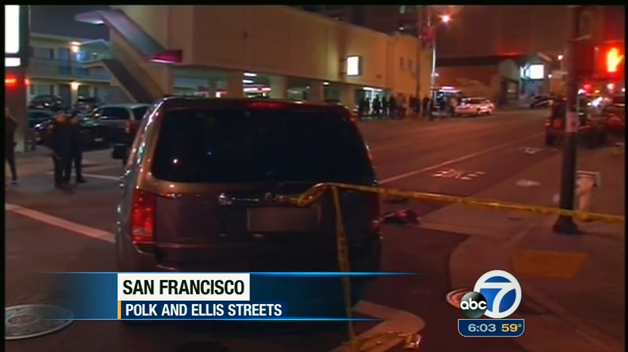
Just before the new year, an accident in San Francisco left a 6 year-old girl dead and her mother critically wounded. The driver, Syed Muzzaraf, was behind the wheel of his Honda Pilot and turned into the family, who were utilizing the crosswalk at an intersection, without yielding to their right of way. Additional details are not clear at this time, but initial reports did not indicate the involvement of alcohol or any other controlled substance and the driver appeared to be entirely in control of the vehicle at the time.
While this would normally be buried in the local section of the newspaper and little more than a blip on the evening news, the fact that the driver was a contractor for the ride sharing service Uber has somehow raised it to the status of national news. Rather than focus on the dozens of other potential issues that this incident could help highlight, such as better pedestrian crosswalks or EMT response time or improved licensing requirements, the news media has instead decided to focus on whose insurance should foot the bill. They are trying to make the case to have Uber's commercial insurance cover the incident, even though Muzzaraf was not actively transporting an Uber customer at the time.
Rather than focusing on the causes for the incident, such as lack of driver patience or inadequate driver training, the attention has been shifted to avoid examining some of the deeper issues that create dangerous situations on our roadways. The death of young Sophia Liu will be trivialized in an effort to create a bigger story and the responsibility of the driver, Muzzaraf, will be minimized, allowing him to slip out of the limelight. If instead we focused on the underlying causes for the problems and made solutions to treat them instead of always only addressing the symptoms that bubble to the surface, we could help prevent these types of incidents in the first place.
We hope that Sophia's mother will recover from her injuries and our deepest sympathies go out to the Liu family for their loss.
It saddens me to even compose this, but this study by the AAA Foundation seems to point towards more Americans taking bad driving behaviors less seriously that in past years. What worries me the most is not just that we are less aware of how these bad driving behaviors affect other drivers on the road, but the fact that an increasing number of individuals seem to suffer from "do as I say, not as I do" syndrome. The fact that there are so many people who are quick to condemn, but not alter their own behavior just goes to show the ever increasingly selfish streak that our society seems to be developing. I realize that I sound like a ranting, crotchety old man, but it frustrates me to no end because of how often I have recently had run-ins with people who were so inattentive or dangerous behind the wheel that they nearly caused an accident. The worst part is that this is entirely preventable.
Last week, a video of an altercation in New York City between a group on motorcycles, affiliated with a Hollywood Stuntz event, and a family in a Range Rover emerged on the Internet. The video showed a bunch of squidly riders swarming around the black SUV, one of them intentionally brake-checking the driver. When a slight bump occurred, the reaction from bikers was to mob the SUV and physically assault the vehicle and threaten the driver and his family, causing the driver to panic and attempt to escape the situation, resulting in at least one serious injury. To further fan the flames, additional footage was revealed prior to the incident showing the motorcyclists all over the road, riding recklessly, and violating countless laws. Add to that the ultimate outcome of the altercation with the Range Rover, which includes assaulting the driver, and it is clear that these squids are nothing more than the undesirable dregs of our community.
Such deplorable behavior from bikers, whether we like them or not, sullies the good name of those of us who are responsible motorcyclists. The fact that there has not been a unified refutation of these individuals from the motorcycling community at large is almost equally disheartening. Instead of condemning the actions of these delinquents, our tepid response simply allows us to be implicated as tacitly accepting such irresponsibility. Why would those of us who ride responsibly want to have any association with people who risk not only their own lives, but the lives of others, especially the life of a child?
As motorcyclists, we want other motorists to respect us. We fight for our right to safely share the roads. We fight to get motoring laws changed to improve our safety. However, when we fail to speak out against behavior that makes us all look like thugs and criminals, we set those actions back and create more enemies who will fight against our common cause. If our goal is to make the roads safer and more enjoyable for all road users, we must be willing to not only to answer a call to arms when something bad happens to one of our own; we must also be prepared to leap to action when elements within our community commit transgressions that no sane person would stand for.
If our goal is truly to fight for our rights as motorcyclists, we must recognize that criminal behavior is not only undesirable, but intolerable. While it may seem like nothing more than words, distancing ourselves from those people who commit such atrocities, who demonstrate such a cavalier attitude towards their own safety and the safety of others, helps other motorists to distinguish between those of us who are responsible riders that take everyone's safety into consideration and those selfish clowns who believe that they somehow are above the law.
Let us draw a line in the sand at this incident and stop enduring those who sully our good name. Let us no longer stand idly by when members of our community commit reckless acts against other motorists. Let us vocally castigate and physically cast out those who believe that their egotistical self-gratification is more important than the safety of others around them.
Please pass this letter to our fellow motorcyclists and encourage them to be more active in voicing their derision for the riders in this incident. If we wish to recruit more people to help our motorcycling cause, we must show that we are amenable to condemning the actions of those among us who create chaos.