Showing posts with label Google. Show all posts

Monday, October 5, 2015

Editorial: Google's Self Driving Cars show that humans are terrible at following the rules of the road

By Driving_Google_Self-Driving_Car.jpg: Steve
Jurvetson derivative work: Mariordo [CC BY 2.0
(http://creativecommons.org/licenses/by/2.0)],
via Wikimedia Commons
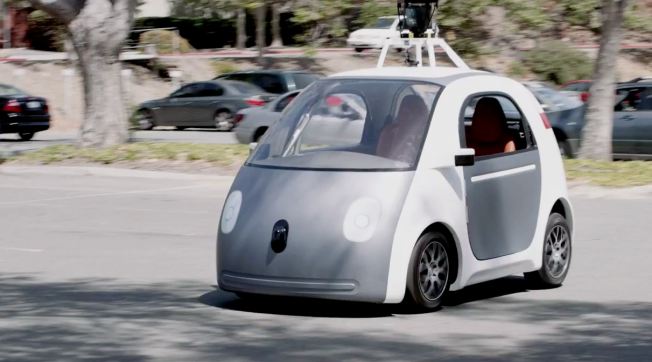
While Google's self-driving cars have gotten a fair amount of press recently for accidents they were involved in, one thing that has not been talked about at all is how the self-driving cars are doing a great job of highlighting just how awfully Americans drive. Every accident so far for Google's self-driving car testers on which the technology is being developed has been the result of human error. Whether that was the error of another driver or of the "driver" behind the wheel, each mistake was not the fault of computers controlling the car. In fact, the computers are coded to so strictly follow the laws that it actually got stuck at an intersection with a four way stop because it placed traffic laws and safety above speed and convenience. It followed the rules to the letter when no one else on the road was doing the same. In order to proceed, the programmers had to alter the coding to get the car to be more aggressive and to emulate some of the bad habits of human drivers.

The fact that we, as drivers, are pretty much granted the privilege to drive for a lifetime without so much as a cursory follow-up to make sure that we are still driving safely is a pretty scary reality. Most drivers develop bad habits over time and those habits are reinforced when we regularly get away with them. Oftentimes it takes a major shift in paradigm or a life-altering event to get most drivers to even look at their own driving habits and reconsider just how good they really are at the whole driving thing. That does beg the question, if we have to teach the self-driving cars to drive like us while there are still human drivers around on the roads, will the robot cars continue to drive like us when humans stop driving altogether? Will having a self-driving car really make you safer if you are still surrounded by people who cannot drive?

What if, and stay with me here, instead of changing how the computers will drive, we start to change how we drive? It is time that our driving legislation caught up with the times and instead of just focusing on easily ticketable offenders designed to bring in money, we focus on equally ticketable offenders that require more attentive enforcement, but are intended to improve safety. Instead of spending money on technology from questionable automated enforcement companies, municipalities could use those funds to require retesting every five or ten years and the fees from the retesting could be used to make the process self sustaining. Police officers, instead of spending time sitting behind a radar gun, could be required to know the driving laws and would actually make an effort to enforce things such as reckless driving, failure to stop at stop signs, or distracted driving.

Heck, I will take it one step further and say that perhaps our driving laws should require mandatory training on motorcycles or bicycles as well to boost the awareness of drivers behind the wheel. While not everyone will continue to use it as a means of transport, just the exposure to living on two-wheels could prove a powerful mechanism for delivering the message about how important it is to be attentive and alert when driving.

Whatever the case, we should look at the upcoming revolution of self-driving cars as a blessing in disguise and as an opportunity to reshape how Americans approach the whole idea of driving. New legislation will be required to cover these self-driving cars and using that as a way to get changes made to our current laws might be a ripe opportunity. On top of that, we should thank Google for helping to bring to light just how bad we are behind the wheel. 

Monday, June 23, 2014

Editorial: Regulating smartphone apps for drivers might not be such a bad thing

This past weekend, I, along with what felt like every single person in the Boston metro area, headed down to Cape Cod to enjoy the official start of summer. Getting down there, we mapped the route and took advantage of the information that Google crowd sources through Waze to try to avoid the accidents and excessively heavy congestion. As grateful as I am for the access to the information, I cannot help but wonder if in the process of collecting the individual data points from users, smartphone apps like Waze might be inadvertently contributing to the very problem it was intended to help people avoid.

Driving down the road, it was clear that many of the drivers on the road were busy looking down at their phones and not paying attention to the road. For example, the number of people camped out in the left lane at just under the speed limit, too busy gazing deeply into their phone to bother to check their rear-view mirror periodically. The same thing appeared to happen on the return trip with a number of people seemingly totally unaware of a fast approaching ambulance, lights and sirens blaring.

This week, the NHTSA and the White House announced a new proposed transportation bill that would place limits on smartphone map apps that many users may utilize while behind the wheel. While it is too early to know exactly how they may go about actually implementing such regulations, it already has many smartphone hardware and software makers rather anxious. Automakers, on the other hand, are quickly getting behind such regulation. While at first glance, even the proposal of such regulation might seem like government overreach of the worst kind, but there might just be a silver lining to this situation.

Image courtesy of Autoblog.com
The smartphone and in-car infotainment industries have been on converging paths for sometime now. As smartphones have gotten more powerful, people have become ever more reliant upon them to replace older in-car systems such as CD players and even built-in navigation systems. For many drivers, the ability to play their music and access their phone book is now a prerequisite for purchasing a car. However, the in-car experience currently often requires actions that take the driver's attentions from the road, causing everything from minor inconvenience to major accidents. Perhaps this legislation, or even just the mere threat of it, will accelerate the pace of integration of smartphones as the primary device powering the in-car infotainment experience.

Earlier this year, Apple announced the first major step towards full smartphone integration with its CarPlay standard. Google is hard at work on an integration for Android devices in collaboration with the Open Automotive Alliance. Taking advantage of the ever increasingly powerful smartphone devices that nearly all of us carry with us wherever we go anyway allows automakers to focus less on unsuccessfully trying to create an in-car infotainment experience (I'm looking at you, Cadillac) and instead focus on giving us great cars while allowing us to use the already powerful smartphone-bound applications we already have access to.

While I have my reservations about allowing access to certain apps from behind the wheel, I can see the tremendous value in allowing drivers to make ever greater use of the always upgradeable device in our pockets instead of relying on something built into the car that will easily be outdated almost by the time it rolls off the dealer lot.

Monday, June 2, 2014

Editorial: Why Google's Self-Driving car is a good thing for everyone

Image courtesy of Adweek
Much has been made this week about the news from Google that the self-driving car is advancing along at a right steady pace. In fact, they showed footage of people giving their latest demonstrator, a rather cute little thing with a a slightly doe-eyed face on it and has no steering wheel or pedals, a spin. Many people, particularly car enthusiasts, lament it as the first nail in the coffin of the American car culture. Others whinged at the potential legal ramifications and debated the issue of legal liability in case the self-driving car was involved in an accident. Whatever the reason, people saw lots of negatives in this technology instead of seeing the potential positives this has for just about every possible road user.

Sunday, August 25, 2013

Editorial: The Slow Demise of the Portable Navigation Device

Image courtesy of trustedreviews.com
For all intents and purposes, the portable navigation device (PND) is on its way out, soon to be replaced entirely by in-car integrated navigation systems, or more likely, our smart phones. A lot of factors are leading to this change, key among them the sheer proliferation of smart phones in our lives and the availability of smart phone apps that, in the last few years, have sprouted all of the functionality that used to be exclusive to PNDs and many features that go far beyond. A portable device that we have on our person nearly every waking moment that is capable of providing near limitless detail, endless point of interest data, and maps that are always up to date.

In fact, just this weekend, my wife and I took a trip out to the Berkshires in western Massachusetts. Almost out of habit, I grabbed our 4 year old Garmin navigation device and threw it in the car with us as we hit the road. I bought the Garmin 765T years ago because it was an easy to use interface, included Bluetooth connectivity, and had traffic data with no subscription fee. At the time, Garmin did not offer a lifetime maps subscription so map updates were going to be a potentially costly maintenance fee over the years. Still, for the price paid, the device definitely worked well enough, especially in our last car, a Miata, with its small amount of windshield space.