

Showing posts with label maintenance. Show all posts
Showing posts with label maintenance. Show all posts
Tuesday, August 1, 2017
Long Term Test: 2014 Ford Focus Electric post #5


Friday, January 20, 2017
Long Term Test: 1984 Shogun 600 post #4
 |
| Beach Streets Midtown open streets event in Long Beach, CA |
Key among the items that needed to be addressed was the chain, which had not been cleaned in easily a couple of years and a few hundred miles worth of riding. As a result, the drive train, including the chain, chain ring, and rear derailleur all had accumulated a wealth of road grime. Since we had plenty of people working the booth I was staffing at Beach Streets, I took the opportunity to give my chain and drive train a good scrubbing, With it freshly cleaned and lubed, I was able to take it for a quick ride along the Beach Streets route while the streets were still closed. For a bike that is over 30 years old, it still rides beautifully and is still my favorite bike ever.
Hopefully once the weather becomes agreeable again in the spring, I will be able to spend more time out riding. I might also have a few accessories that will be acquired to allow me greater latitude in carrying precious cargo. We shall see at the next update.
Friday, July 15, 2016
Long Term Test: 2007 BMW K1200S post #7
Update #7
Mileage: 30,010
 When people say BMW's are expensive to maintain, they certainly aren't kidding. This pretty much applies to both their motorcycles as well as their cars. While it has been a while since I have had to experience the bad taste of paying for repairs to a BMW, I did have to get maintenance completed on my K1200S earlier this year and the price tag was several times more than I anticipated, largely because of a few unexpected items.
 First, the bike needed basic maintenance. That meant an oil change, inspection, and general check-up on electronic components. Typically, this costs around $150-$200. On top of that, I knew that the front tire was looking a little thin on tread after only 6,500 miles so I was expecting to need to replace that pretty soon. The low mileage is likely due to my tendency to ride with the preload set very high in the rear, resulting in greater wear on the front tire. It makes the bike handle better, but the trade-off is that the greater loading on the front tends to wear that tire down. Since I decided to go ahead and replace that tire, that added another $200+ to the tab for the tire plus the installation labor.
However, within an hour or so of dropping my bike off at the dealer, they called and informed me that the rear brakes were worn and needed to be replaced while the battery was showing low voltage and needed to be replaced. That battery, which I had replaced just a few years ago, was apparently already out of warranty when the dealership in MA sold it to me. That dealership has a reputation for less than ethical treatment of customers so I suppose I should not be surprised when the Yelp reviews prove to be right. As for the brakes, the combination of linked brakes on this bike, where grabbing the front brake level also applies one of the rear caliper pistons, as well as my tendency to use the rear brake to stabilize the rear-end while doing low-speed lanesplitting, is the likely cause of the increased brake wear. The brake job was going to be another $300 while the battery added around $100 to the final bill.
With taxes and the cost of the rental bike, the total came to just under $1,000. What I save on gas and time with this bike likely gets made up with the increased maintenance costs. Fortunately, my enjoyment of the bike outweighs all of the cost factors and a few of the costs I can reduce by simply making minor adjustments in my riding habits.
Mileage: 30,010

 First, the bike needed basic maintenance. That meant an oil change, inspection, and general check-up on electronic components. Typically, this costs around $150-$200. On top of that, I knew that the front tire was looking a little thin on tread after only 6,500 miles so I was expecting to need to replace that pretty soon. The low mileage is likely due to my tendency to ride with the preload set very high in the rear, resulting in greater wear on the front tire. It makes the bike handle better, but the trade-off is that the greater loading on the front tends to wear that tire down. Since I decided to go ahead and replace that tire, that added another $200+ to the tab for the tire plus the installation labor.
 |
| Brand new Michelin Pilot Road 4 front tire on the K1200S |
With taxes and the cost of the rental bike, the total came to just under $1,000. What I save on gas and time with this bike likely gets made up with the increased maintenance costs. Fortunately, my enjoyment of the bike outweighs all of the cost factors and a few of the costs I can reduce by simply making minor adjustments in my riding habits.
Friday, April 29, 2016
Long Term Test: 2014 Acura MDX FWD Tech post #5
Update #5
Current mileage: 15,564
 The MDX has become the road trip car of choice. In 2014, it was used to take the whole family to the Monterey Peninsula where we enjoyed an extended Thanksgiving holiday. Last year, we used it to hit up San Diego with our bikes in tow, taking a break from our busy lives to enjoy a weekend biking around Coronado Island. This year, the MDX was called upon to serve as transportation for my wife and me along with our rescue pup on a weekend excursion to the avocado and wine growing town of Fallbrook, CA. I will cover the details of that trip in a separate post, but for this latest update on the MDX, I want to focus on two key aspects: puppy transport and ease of cleaning.
Current mileage: 15,564

Friday, January 29, 2016
Long Term Test: 2015 Jaguar F-Type V6 Post #3
Update #3
Current mileage: 7,520
Unfortunately, I have not been able to spend much time with the Jag these last few months, mostly the result of a very busy year, more time spent on two wheels, and a new addition to my family (see the photo). Still, despite the minimal time spent, there are a few noteworthy items about our experience with the Jag since our last update.
First, just the other night, I was adjusting the positioning of the Jag within its garage space, which is in the third bay of a three-car garage, meaning it has its own dedicated garage door. I must say, it is kind of insane just how wide the Jag feels from behind the wheel at parking lot speeds. Low speed maneuvers, especially in tight spaces, really highlight the terrible rear visibility when the top is up as well as how tall the front fenders feel from the driver's seat. Mix in the generally low seating position, inching the big Jag forward into its garage space from a rather steep driveway was a tad nerve wracking as I definitely did not want to accidentally bump anything. Jaguar really should consider, especially on the convertibles, including the back-up camera as standard equipment and possibly an option for dropping both driver and passenger side-view mirrors down (versus just the passenger side one) to allow for easier parking and protecting the flanks of such a pretty car.
During the last six months, the Jag has also gotten its first proper service visit, the result of a need to address a few niggling issues, including a door rattle that had been present since almost day one. Jaguar, as a luxury manufacturer, does a good job getting dealers to provide a level of service befitting its customers. A Jag loaner, an XF 2.0t was provided, and the slinky convertible was taken in and they made an effort to be as timely about it as they could. But in thinking about the luxury service experience, it is hard to overlook the fact that some new players, such as Hyundai, have flipped the whole market on its head by starting to offer white-glove level service to certain customers. That includes free pick-up of the customer's car, dropping off of a loaner, and essentially making the service experience much less painful. Given the price premium that Jag's command, I cannot help think how much more enjoyable the ownership experience would be if Jag upped its service game even more.
With warmer weather on the horizon, although a potentially seriously wet rainy season due to El Nino, we should have more fun experiences to share at our next update.
Current mileage: 7,520
 |
| Our newly adopted little dog hanging out with the big Jag |
First, just the other night, I was adjusting the positioning of the Jag within its garage space, which is in the third bay of a three-car garage, meaning it has its own dedicated garage door. I must say, it is kind of insane just how wide the Jag feels from behind the wheel at parking lot speeds. Low speed maneuvers, especially in tight spaces, really highlight the terrible rear visibility when the top is up as well as how tall the front fenders feel from the driver's seat. Mix in the generally low seating position, inching the big Jag forward into its garage space from a rather steep driveway was a tad nerve wracking as I definitely did not want to accidentally bump anything. Jaguar really should consider, especially on the convertibles, including the back-up camera as standard equipment and possibly an option for dropping both driver and passenger side-view mirrors down (versus just the passenger side one) to allow for easier parking and protecting the flanks of such a pretty car.
During the last six months, the Jag has also gotten its first proper service visit, the result of a need to address a few niggling issues, including a door rattle that had been present since almost day one. Jaguar, as a luxury manufacturer, does a good job getting dealers to provide a level of service befitting its customers. A Jag loaner, an XF 2.0t was provided, and the slinky convertible was taken in and they made an effort to be as timely about it as they could. But in thinking about the luxury service experience, it is hard to overlook the fact that some new players, such as Hyundai, have flipped the whole market on its head by starting to offer white-glove level service to certain customers. That includes free pick-up of the customer's car, dropping off of a loaner, and essentially making the service experience much less painful. Given the price premium that Jag's command, I cannot help think how much more enjoyable the ownership experience would be if Jag upped its service game even more.
With warmer weather on the horizon, although a potentially seriously wet rainy season due to El Nino, we should have more fun experiences to share at our next update.
Wednesday, July 29, 2015
Long Term Test: 2007 BMW K1200S post #5
Fifth update
Current mileage: 26,833
 Southern California's mild weather continues to cooperate and that means I have the chance to put more miles on the big Beemer. My only constraint, of late, has been that two-wheeled transport is not a great way to travel with four-legged companions, especially one that is rather precocious and weighs about 40 pounds. Still, whenever I can, I try to make use of the opportunities to go out and ride, having added another 1,000+ miles since the last update. Most of those miles are highway miles, traveling back and forth between various corners of LA County to run errands or attend events. In the last six months, I even had occasion to use the bike to attend a dressier event, which required a bit of pre-planning since trying to keep my shirt from looking too wrinkled and my hair from being too disastrous.
Much of the riding has been putting the Beemer to use as a workhorse, hauling our biweekly veggie haul from a local garden or gathering less common Asian frozen goods that elude me in Long Beach from grocery stores in other neighboring areas. The BMW continues to prove its versatility as it carries plenty without feeling unbalanced and without a significant impact on the handling or the fuel economy. In fact, the overall fuel economy is not significantly different from my Ninja 650R, which sported a motor that was half the size and produced less than half the power.
One thing that I admittedly enjoy is just how much attention the K1200S gets. In the tri-color pattern, it is an eye-catching combination and people seem to notice it on the street. On more than a few occasions, I have caught a passerby doing a double-take or a driver or passenger in a car staring as the bike goes by. The bike is not obnoxiously loud and does not garner the same kind of attention as our long-term Jaguar, but it has its own admirers.
Finally, there is something to be said for smart design. Access to so many basic repairs for the K1200S are designed to be extremely easy to do. A perfect example is replacing a burnt out headlight bulb. On my old bike, the Ninja 650R, it would have required dis-assembly of much of the instrument cluster to make the switch, as is the case with many of the bikes on the market. On the BMW, they smartly designed caps that twist off the back of the headlight and it is possible to replace the bulb with nothing more than your hands. This comes in handy when you blow a bulb in the early evening and need to make a fast swap. At least on this front, I appreciate that this bike was notably more expensive than many of its peers.
Wednesday, January 22, 2014
Product Review: Centric 120 Series Rotors and Stoptech Street Performance Pads
In my third long term post about my S2000, I mentioned that I had needed to change the front brake pads and rotors. Not wanting to pay an exorbitant amount for the OEM Honda brake pads and rotors, I did a little digging around and found what I believe to be the best pad and rotor combination for my driving needs.
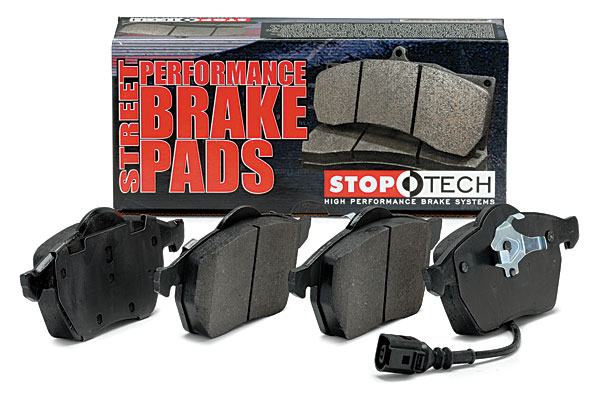
StopTech Street Performance Brake Pads
When I had my 1997 Honda Accord LX back during my time in college, I had already experienced two different sets of aftermarket brake pads: Brembo Sport brake pads and the Hawk HPS Street brake pads. Between the two set of pads, I was most satisfied with the Brembo Sport brake pads. Unfortunately, they are not available for the S2000 (at least they were not at the time of this review), and I never liked the fact that the Hawk HPS pads performed somewhat poorly when cold. Luckily, StopTech had recently introduced the Street Performance pads for the S2000. Knowing that StopTech is a reputable manufacturer of brake components, I was intrigued enough to give them a shot.
The most interesting part about these brake pads is that they are "pre-scorched." This means, according to the box at least, that these brake pads will offer OEM like stopping power before being broken in. Pre-scorching also apparently ensures that these brake pads offer OEM like brake feel and stopping power while the pads are still cold. Sounds too good to be true, right? I am happy to report that StopTech's statement about pre-scorching seems to be true. During the first few days of use, I felt no difference in stopping power or feel between the StopTech pads and the OEM Honda pads. As my use progressed, I noticed the car's stopping distance becoming shorter, and the amount of force I needed to apply to the brake pedal coming to a stop light getting less. After being properly broken in, the pads definitely offer much more stopping power than the OEM Honda pads when warmed up.
 Of course, this additional stopping power does come at a price. The StopTech pads are probably the dustiest and noisiest pads that I have used to date. During my first two weeks of use, before the pads were fully broken in, stopping was still a fairly quiet affair. After the pads were broken in though, stopping, especially when cold, became extremely noisy. The sound does go away after the pads get warm. Unfortunately, my daily commute to work is not that long, so the pads seldom have enough time to warm up to full operating temperature. Extra brake dust is also an issue with these pads too. My Enkei RPF1 wheels usually end up being covered in brake dust within about three weeks. I often forget how shiny my wheels are until I wash my car and scrub it all off.
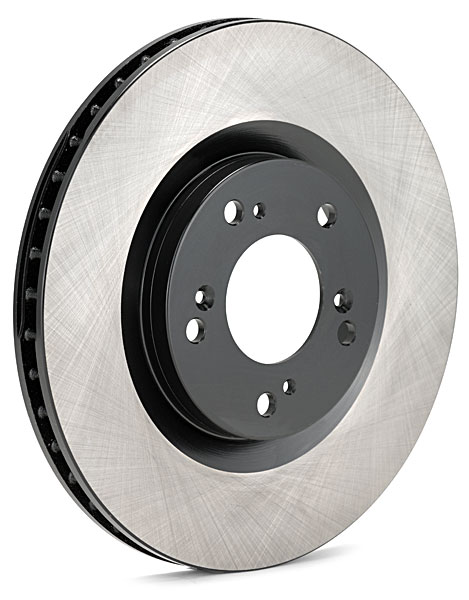
Centric 120 Series Plain Rotors
Having to never needed to replace the front rotors on my S2000 until now, it took me a little while to come to a decision on what rotors to pick. I had originally thought that getting rotors from StopTech would help alleviate the noise issue. Unfortunately, StopTech only offers replacement rotors that are slotted or cross-drilled, which I just could not justify spending the extra money on fancy rotors when I would not have the time to use them on an autocross or track day. I have also heard that slotted and cross-drilled rotors have a tendency to wear out brake pads faster, which would have also made little financial sense. I was about to bite the bullet and just get a set of StopTech slotted brake rotors when I came across reviews on the Centric 120 Series which seemed good, so I figured they would be worth a shot.
There really is not too much to say about the Centric 120 Series plain rotors. They work just as well as the OEM Honda rotors and cost less. I think the best part about these rotors are the painted vents and rotor hat. The paint hides the rust that the OEM Honda rotors tend to exhibit after a few months.
While I cannot comment on the effectiveness of this brake pad and rotor combination on an autocross or track, I can safely say that this combination works well in daily driving and for spirited thrashing about on windy roads. The StopTech pads work well in the daily grind of stop-and-go traffic, offering OEM like stopping power. Take your car up to a canyon or mountain road for some spirited driving, where the pads and rotors can get properly warmed up, and the stopping power and brake feel far surpasses the OEM pads and rotors. The best part? This pad and rotor combination is not that expensive either. The StopTech Street Performance pads cost $53 for the front axle set on Tire Rack, and the Centric 120 Series plain rotors cost $53 each. If you are looking for a good setup for improved brake feel and stopping in daily diving and spirited driving, the StopTech Street Performance brake pads and Centric 120 Series plain rotors make an excellent combo.
StopTech Street Performance Brake Pads
 |
| Image Courtesy of The Tire Rack |
The most interesting part about these brake pads is that they are "pre-scorched." This means, according to the box at least, that these brake pads will offer OEM like stopping power before being broken in. Pre-scorching also apparently ensures that these brake pads offer OEM like brake feel and stopping power while the pads are still cold. Sounds too good to be true, right? I am happy to report that StopTech's statement about pre-scorching seems to be true. During the first few days of use, I felt no difference in stopping power or feel between the StopTech pads and the OEM Honda pads. As my use progressed, I noticed the car's stopping distance becoming shorter, and the amount of force I needed to apply to the brake pedal coming to a stop light getting less. After being properly broken in, the pads definitely offer much more stopping power than the OEM Honda pads when warmed up.
 Of course, this additional stopping power does come at a price. The StopTech pads are probably the dustiest and noisiest pads that I have used to date. During my first two weeks of use, before the pads were fully broken in, stopping was still a fairly quiet affair. After the pads were broken in though, stopping, especially when cold, became extremely noisy. The sound does go away after the pads get warm. Unfortunately, my daily commute to work is not that long, so the pads seldom have enough time to warm up to full operating temperature. Extra brake dust is also an issue with these pads too. My Enkei RPF1 wheels usually end up being covered in brake dust within about three weeks. I often forget how shiny my wheels are until I wash my car and scrub it all off.
Centric 120 Series Plain Rotors
 |
| Image Courtesy of The Tire Rack |
Having to never needed to replace the front rotors on my S2000 until now, it took me a little while to come to a decision on what rotors to pick. I had originally thought that getting rotors from StopTech would help alleviate the noise issue. Unfortunately, StopTech only offers replacement rotors that are slotted or cross-drilled, which I just could not justify spending the extra money on fancy rotors when I would not have the time to use them on an autocross or track day. I have also heard that slotted and cross-drilled rotors have a tendency to wear out brake pads faster, which would have also made little financial sense. I was about to bite the bullet and just get a set of StopTech slotted brake rotors when I came across reviews on the Centric 120 Series which seemed good, so I figured they would be worth a shot.
There really is not too much to say about the Centric 120 Series plain rotors. They work just as well as the OEM Honda rotors and cost less. I think the best part about these rotors are the painted vents and rotor hat. The paint hides the rust that the OEM Honda rotors tend to exhibit after a few months.
While I cannot comment on the effectiveness of this brake pad and rotor combination on an autocross or track, I can safely say that this combination works well in daily driving and for spirited thrashing about on windy roads. The StopTech pads work well in the daily grind of stop-and-go traffic, offering OEM like stopping power. Take your car up to a canyon or mountain road for some spirited driving, where the pads and rotors can get properly warmed up, and the stopping power and brake feel far surpasses the OEM pads and rotors. The best part? This pad and rotor combination is not that expensive either. The StopTech Street Performance pads cost $53 for the front axle set on Tire Rack, and the Centric 120 Series plain rotors cost $53 each. If you are looking for a good setup for improved brake feel and stopping in daily diving and spirited driving, the StopTech Street Performance brake pads and Centric 120 Series plain rotors make an excellent combo.
Monday, January 13, 2014
Long Term Test: 2012 Hyundai Sonata 2.0T Limited post #2
Second Update
Current mileage: 21,245
 I had an opportunity to spend some more time with the Sonata, this time on some more extended trips. The longer periods behind the wheel reveal a real weakness in the Sonata's overall design: it's steering feel. Since we were with family, both my wife and I shared driving duties at various times. At one point, my father-in-law commented to my wife that she needed to try to be smoother when she was behind the wheel. Just the prior evening, I had driven all of us to Irvine for a Cirque du Soleil performance and my wife noted a few points where she thought I was beginning to nod off. However, the reality was that the Sonata's rather dull and lifeless steering means that the driver is forced to concentrate extremely hard to drive the car smoothly. Even the slightest moment of lapsed concentration can result in slightly jerky motions, especially when one is used to driving cars that have much more responsive steering.
Another area that was starting to suffer after over 20,000 miles on the road was the structural rigidity of the car. While not terribly noticeable on smooth roads, it became increasingly obvious on rutted roads or when hustling the car through fast corners that the cars structure was not as strong as it had been when originally purchased. The rattles and squeaks emanating from all throughout the interior also spoke to the deteriorating vehicle structure. It is disappointing that in only two-years, the Sonata has started to exhibit issues that should not appear in a well-built car until at least 4 to 5 years in. I have driven rental cars with more miles that had fewer squeaks and rattles.
Still, there is much to like about the Sonata. Its rather cavernous interior, enormous trunk, and well-equipped interior make it a genuine value in the segment when it comes to family hauling duties. As far as maintenance, it has required nothing aside from scheduled visits and has been extremely reliable. That turbo-charged motor delivers strong mid-range performance, but the transmission gets caught off-guard at points and occasionally lags to shift when acceleration is called for. Luckily, the gorgeous exterior continues to turn heads and is still one of my personal favorite mid-size family sedans after the recently introduced Mazda6.
Click here to read post #1.
Current mileage: 21,245
Another area that was starting to suffer after over 20,000 miles on the road was the structural rigidity of the car. While not terribly noticeable on smooth roads, it became increasingly obvious on rutted roads or when hustling the car through fast corners that the cars structure was not as strong as it had been when originally purchased. The rattles and squeaks emanating from all throughout the interior also spoke to the deteriorating vehicle structure. It is disappointing that in only two-years, the Sonata has started to exhibit issues that should not appear in a well-built car until at least 4 to 5 years in. I have driven rental cars with more miles that had fewer squeaks and rattles.
Still, there is much to like about the Sonata. Its rather cavernous interior, enormous trunk, and well-equipped interior make it a genuine value in the segment when it comes to family hauling duties. As far as maintenance, it has required nothing aside from scheduled visits and has been extremely reliable. That turbo-charged motor delivers strong mid-range performance, but the transmission gets caught off-guard at points and occasionally lags to shift when acceleration is called for. Luckily, the gorgeous exterior continues to turn heads and is still one of my personal favorite mid-size family sedans after the recently introduced Mazda6.
Click here to read post #1.
Sunday, December 8, 2013
Long Term Test: 2007 BMW K1200S post #2
Second update
Current miles: 23,065
 With just over 23,000 miles, the K1200S has been nearly flawless. The power is still utterly intoxicating, offering speed on demand anytime I want it. The versatility is amazing, as I have used the big Beemer for everything from canyon carving in the mountains of New Hampshire to picking up groceries from at the Chinese grocery store in Downtown Boston to day tripping down to Cape Cod for whale watching. In every situation, the bike proves that it is capable of everything I have to throw at it and I continue to explore the limits of its usability. As I ride pretty much year-round, it has experienced temperatures ranging from well down into the low 30s all the way up to well into the high 90s. No matter what the temperature, the bike is comfortable and offers a sense of stability and security that my much smaller Kawasaki Ninja 650R was unable to provide.
Of course, as with any high performance vehicle purchased pre-owned, it has not been entirely without issue. Last fall, the battery started to struggle to provide sufficient amperage to overcome the resistance in the wiring, leading to challenges starting the bike when the engine was hot. That created a few embarrassing moments at gas stops when I had to push start the bike in order to get it going and on more than one occasion, had to jump-start it to get it running. Luckily, a swap of the battery from the older and less efficient lead-acid variety to the new
AGM model used on current BMW motorcycles more than cured the issue. I have also taken to pulling the battery and storing it on a trickle charger anytime I expect to be unable to use the bike at least once every 2 weeks. The battery issue also created a minor problem with the electronically adjustable suspension, causing the damping setting to get stuck. Luckily, it was stuck in SPORT mode so I was still able to really enjoy the ride, though I do admit that I missed the other damping options on some of the longer trips.

In July, when I had the bike's inspection brought up to date, the mechanic doing the inspection notified me of a few items that needed to be addressed in the near future if the bike was to remain safe on the road. This is what prompted my detour to MAX BMW during the Kancamagus Highway trip. While I did not get the service performed that day, I did collect enough information to feel confident that these were the guys I wanted to use when it came time to have the service done.
Current miles: 23,065
Of course, as with any high performance vehicle purchased pre-owned, it has not been entirely without issue. Last fall, the battery started to struggle to provide sufficient amperage to overcome the resistance in the wiring, leading to challenges starting the bike when the engine was hot. That created a few embarrassing moments at gas stops when I had to push start the bike in order to get it going and on more than one occasion, had to jump-start it to get it running. Luckily, a swap of the battery from the older and less efficient lead-acid variety to the new
AGM model used on current BMW motorcycles more than cured the issue. I have also taken to pulling the battery and storing it on a trickle charger anytime I expect to be unable to use the bike at least once every 2 weeks. The battery issue also created a minor problem with the electronically adjustable suspension, causing the damping setting to get stuck. Luckily, it was stuck in SPORT mode so I was still able to really enjoy the ride, though I do admit that I missed the other damping options on some of the longer trips.

In July, when I had the bike's inspection brought up to date, the mechanic doing the inspection notified me of a few items that needed to be addressed in the near future if the bike was to remain safe on the road. This is what prompted my detour to MAX BMW during the Kancamagus Highway trip. While I did not get the service performed that day, I did collect enough information to feel confident that these were the guys I wanted to use when it came time to have the service done.
Subscribe to:
Posts
(
Atom
)